
Inside the SAVE Field Guide: How We Protect Every Nest
Dentro de la Guía de Campo SAVE
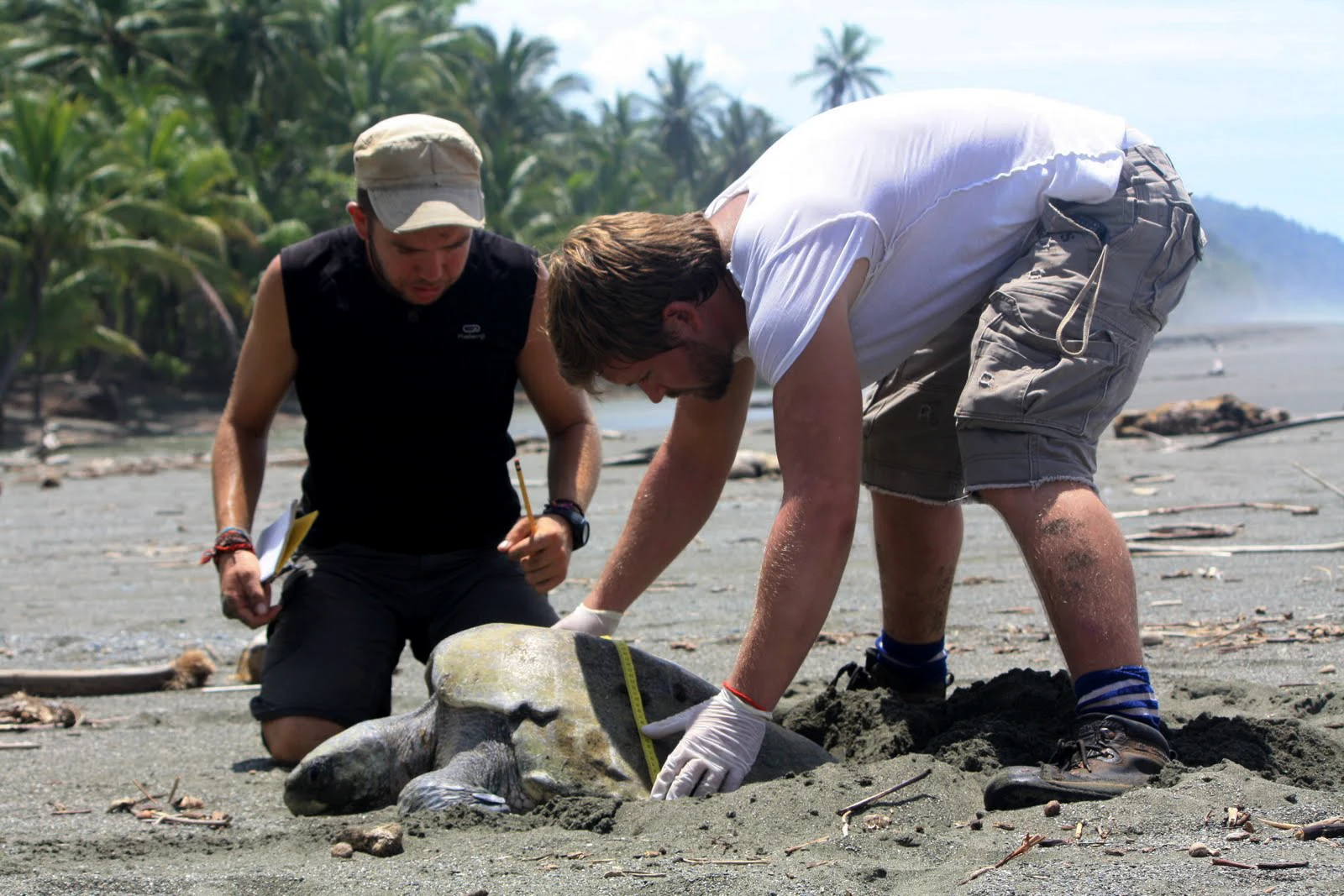
Every SAVE volunteer starts with the same document: a field guide built entirely around one idea—consistency. The data we collect only matters if it’s gathered the same way, season after season, no matter who’s on the beach that night. And underneath every procedure is a simpler rule: turtles nest and hatch without human help all over the world, so our job is to interfere as little as possible while still protecting what we can.
Spotting a nesting mother (May–November)
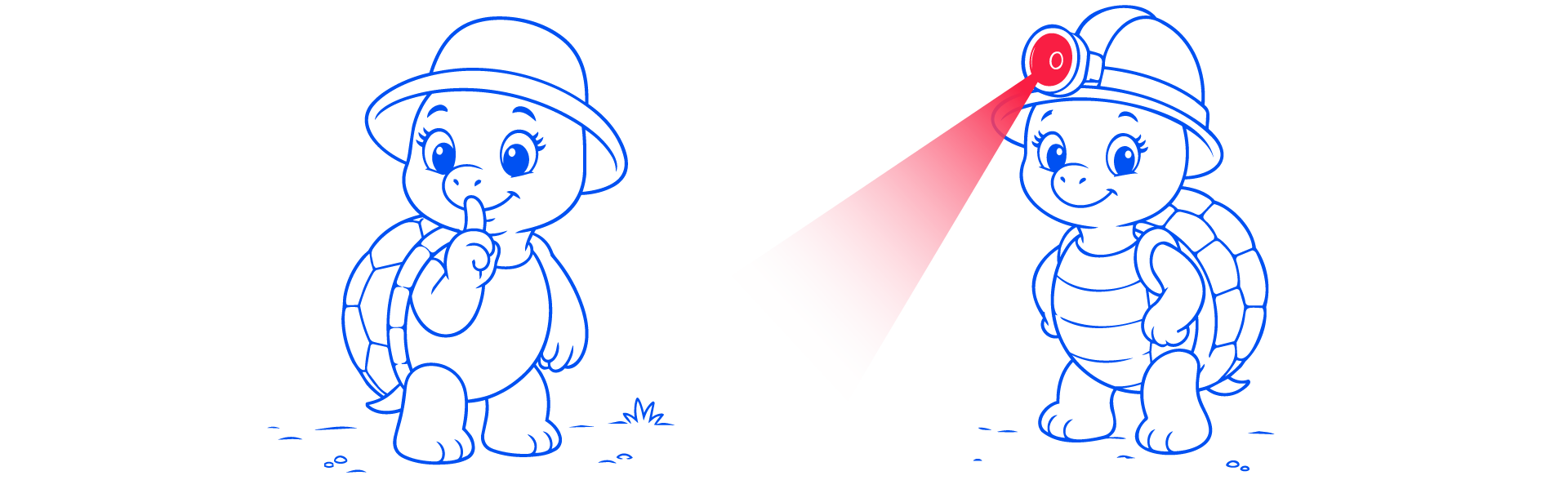
Nesting mothers are easily startled. Bright lights or loud noises can send her back to the water before she lays a single egg—so once we spot one, the rule is simple: no noise, no white light, only red. If she leaves without nesting, she’ll usually come back later that same night or the next to try again. We watch from a distance and let her work.
The nesting process
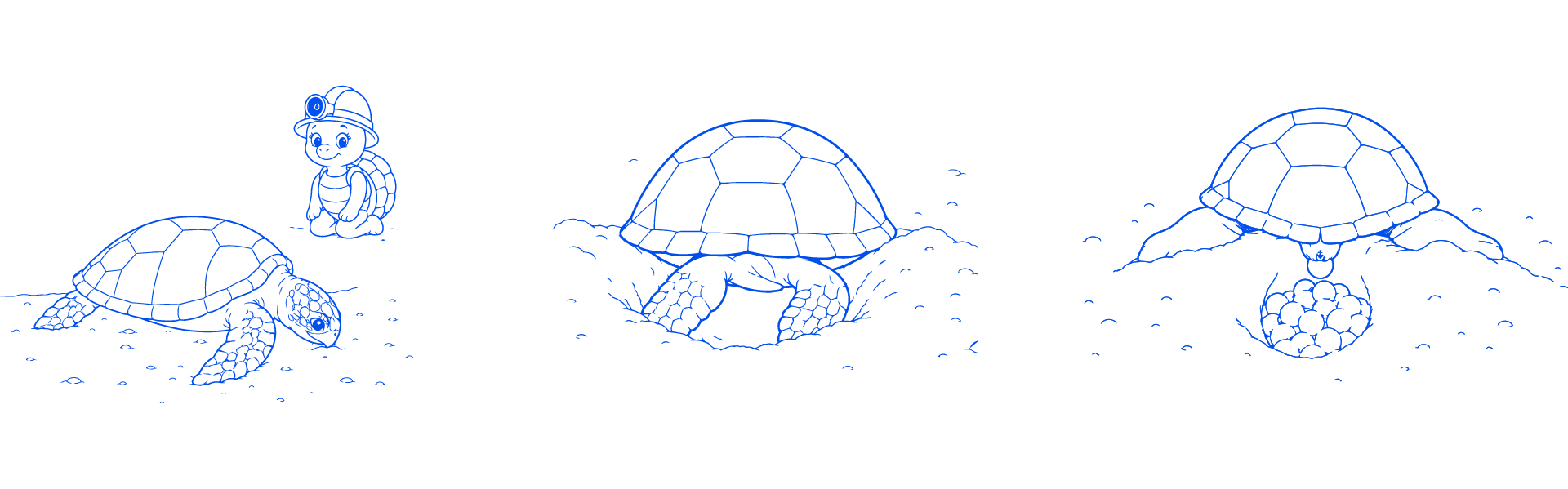
A female turtle may spend an hour or more just choosing a spot before she starts digging. She excavates a wide area first, then finds the right spot to dig the actual egg chamber using her back flippers alone. Once she starts laying—usually 80 to 180 eggs per nest—she enters something close to a trance, and that’s the volunteers’ cue to approach. We always come from behind, moving low, almost crawling, red light only.
If we find a turtle
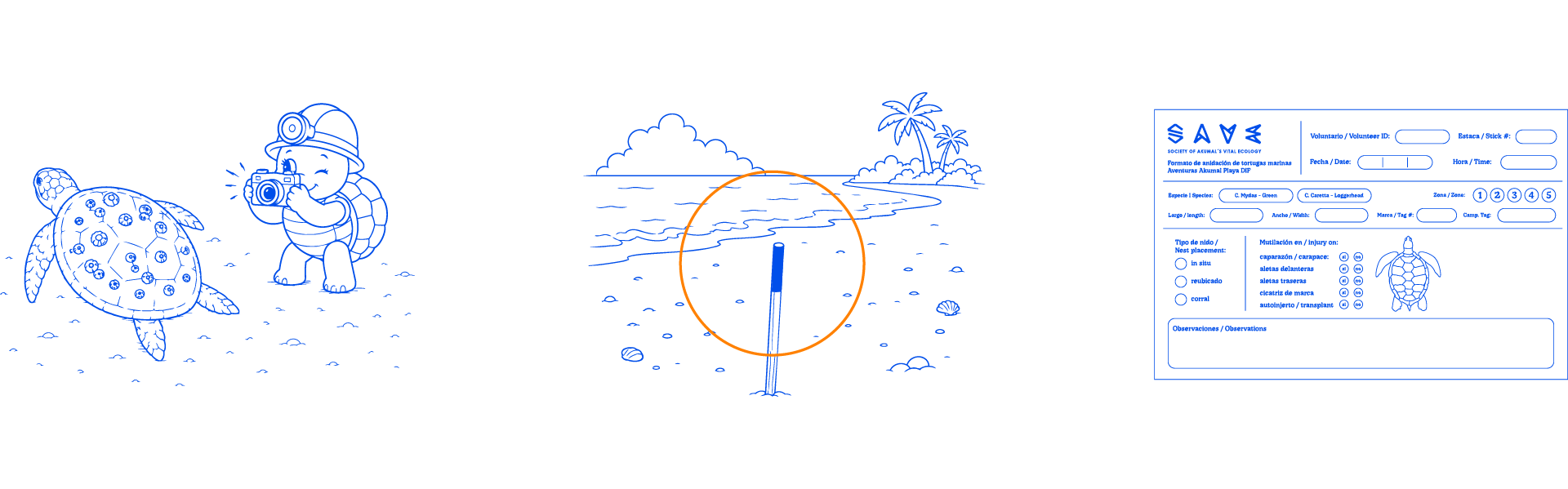
If she’s heading toward a bad spot—another nest, an obstacle—we can sometimes redirect her by acting like a wall: standing still, blocking the path, giving her nowhere to go but a better direction. Once she’s laying, we measure her shell and record: stick number, date, time, species, zone, tag, nest placement, and any injuries or notable observations.
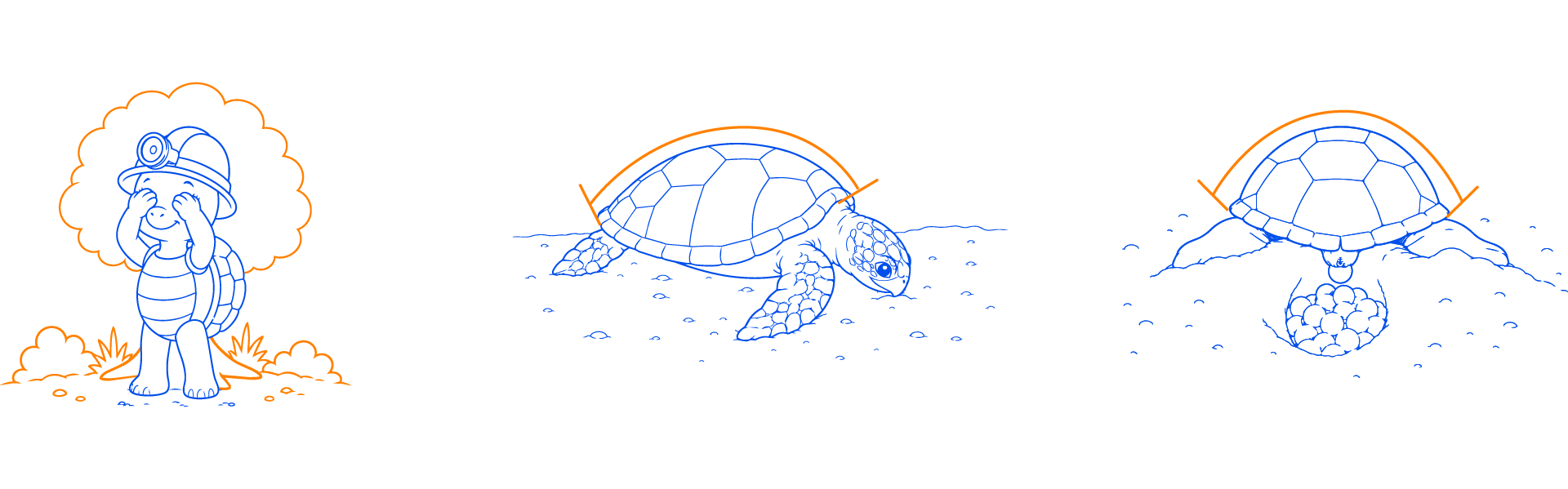
Each nest gets a marking stick labeled C.M. for green (Chelonia mydas) or C.C. for loggerhead (Caretta caretta), planted one hand’s width above the actual nest. If the turtle’s shell shows barnacles or damage, we photograph it. All of it gets logged in the season data book by 11am the same day, or the next morning at the latest.
Want to learn this hands-on?
Learn About Our Volunteer ProgramCada voluntario de SAVE empieza con el mismo documento: una guía de campo construida alrededor de una sola idea—la consistencia. Los datos que recolectamos solo sirven si se recopilan de la misma manera, temporada tras temporada, sin importar quién esté en la playa esa noche. Y debajo de cada procedimiento hay una regla más simple: las tortugas anidan y eclosionan sin ayuda humana en todo el mundo, así que nuestro trabajo es interferir lo menos posible mientras protegemos lo que podemos.
Madres anidando (mayo–noviembre)
Las hembras anidando se asustan con facilidad. Una luz brillante o un ruido fuerte pueden hacer que regrese al mar sin poner un solo huevo—así que en cuanto vemos una, la regla es simple: no hacer ruido, no usar luz blanca, usar solo luz roja. Si se va sin anidar, normalmente regresa esa misma noche más tarde o la siguiente para intentarlo de nuevo. Debemos observarla desde la distancia y dejarla trabajar.
El proceso de anidación
Una hembra puede pasar una hora o más sólo eligiendo el lugar para hacer su nido antes de empezar a cavar. Primero excava un área amplia, luego encuentra el sitio exacto para cavar la cámara de huevos usando únicamente sus aletas traseras. Una vez que empieza a poner—normalmente entre 80 y 180 huevos por nido—entra en una especie de trance: esa es la señal para que los voluntarios se acerquen. Siempre nos aproximamos por detrás, agachados, casi arrastrándonos, solo con luz roja.
Si encontramos una tortuga
Si se dirige hacia un mal lugar—otro nido, un obstáculo—a veces podemos redirigirla actuando como una pared: quedándonos quietos, bloqueando el paso, dejándole solo la opción de ir hacia una mejor dirección. Una vez que está poniendo huevos, medimos su caparazón y registramos: número de estaca, fecha, hora, especie, zona y ubicación del nido tomando una fotografía; también anotamos si tiene alguna lesión u observación relevante.
Cada nido recibe una estaca marcada con C.M. para verde (Chelonia mydas) o C.C. para caguama (Caretta caretta). Si el caparazón de la tortuga tiene percebes o daños, lo fotografiamos. Todo se registra en el libro de datos de la temporada a más tardar la mañana siguiente.
¿Quieres aprenderlo en la práctica?
Conoce Nuestro Programa de VoluntariadoMORE FROM THE JOURNAL
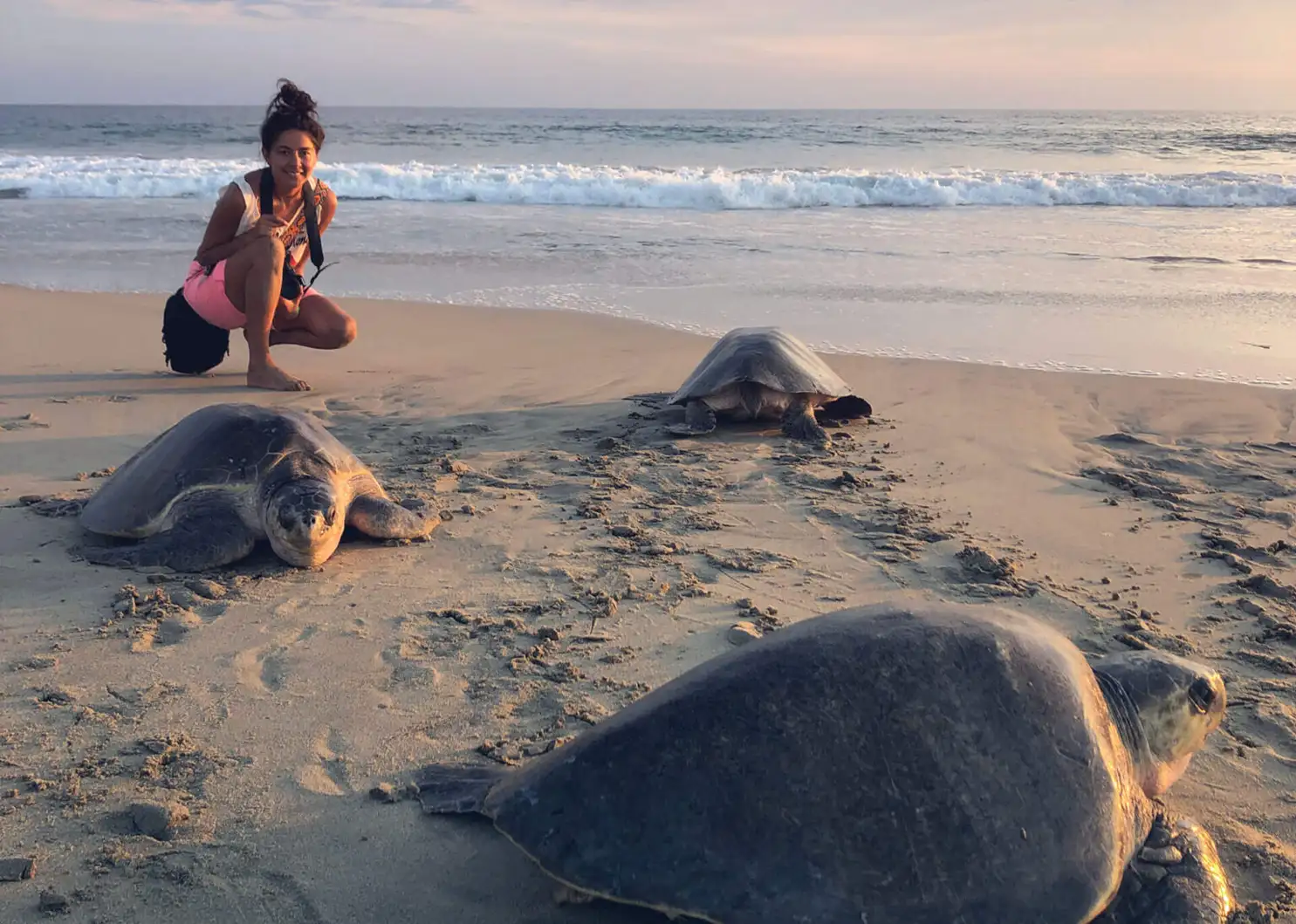
What It Means to Be a Sea Turtle Volunteer
Ser Voluntaria Tortuguera
Read More →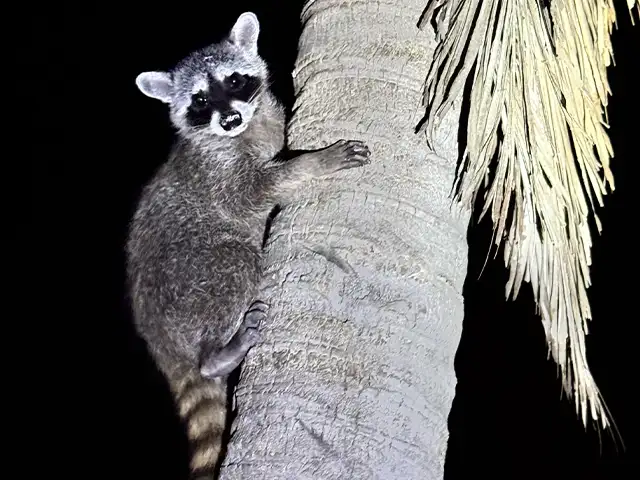
The Raccoon of Akumal (Procyon lotor)
El Mapache de Akumal
Read More →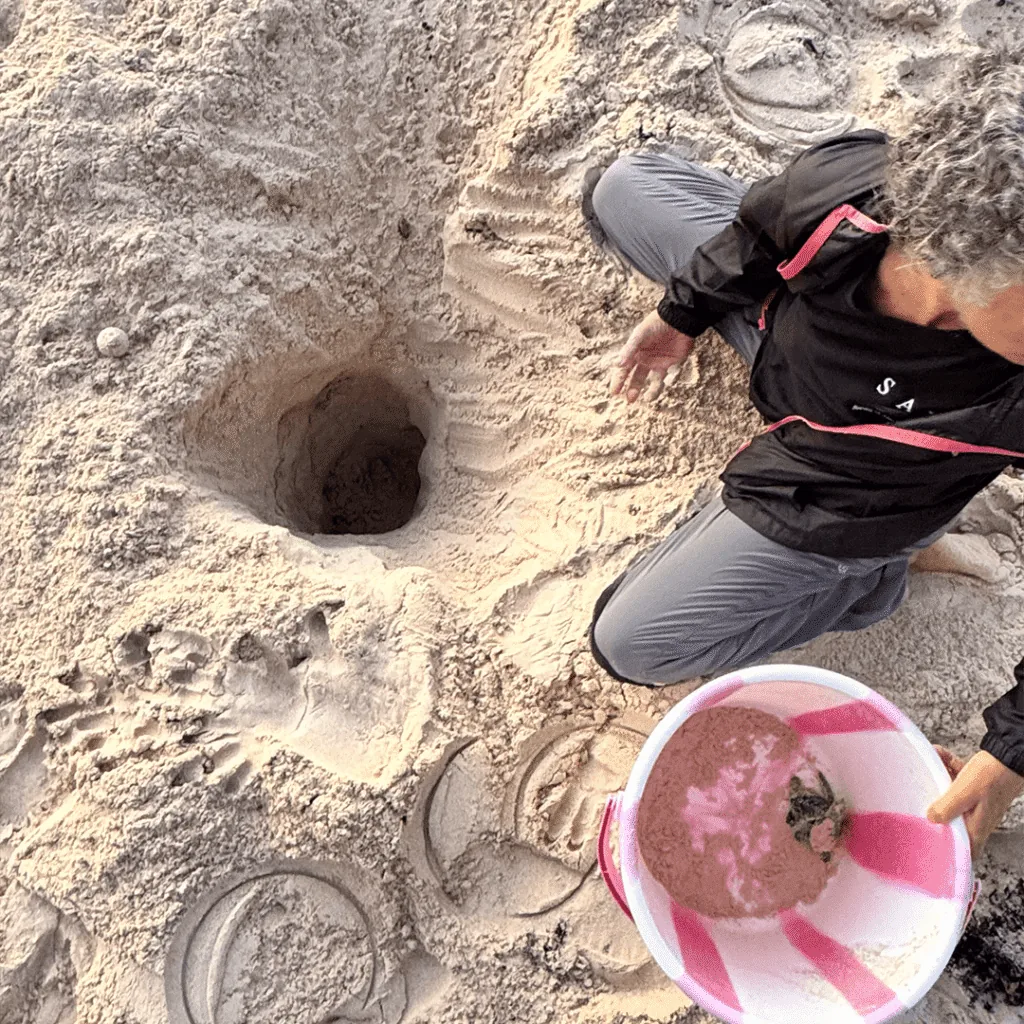
Why Every Nest Counts
Por Qué Cada Nido Cuenta
Read More →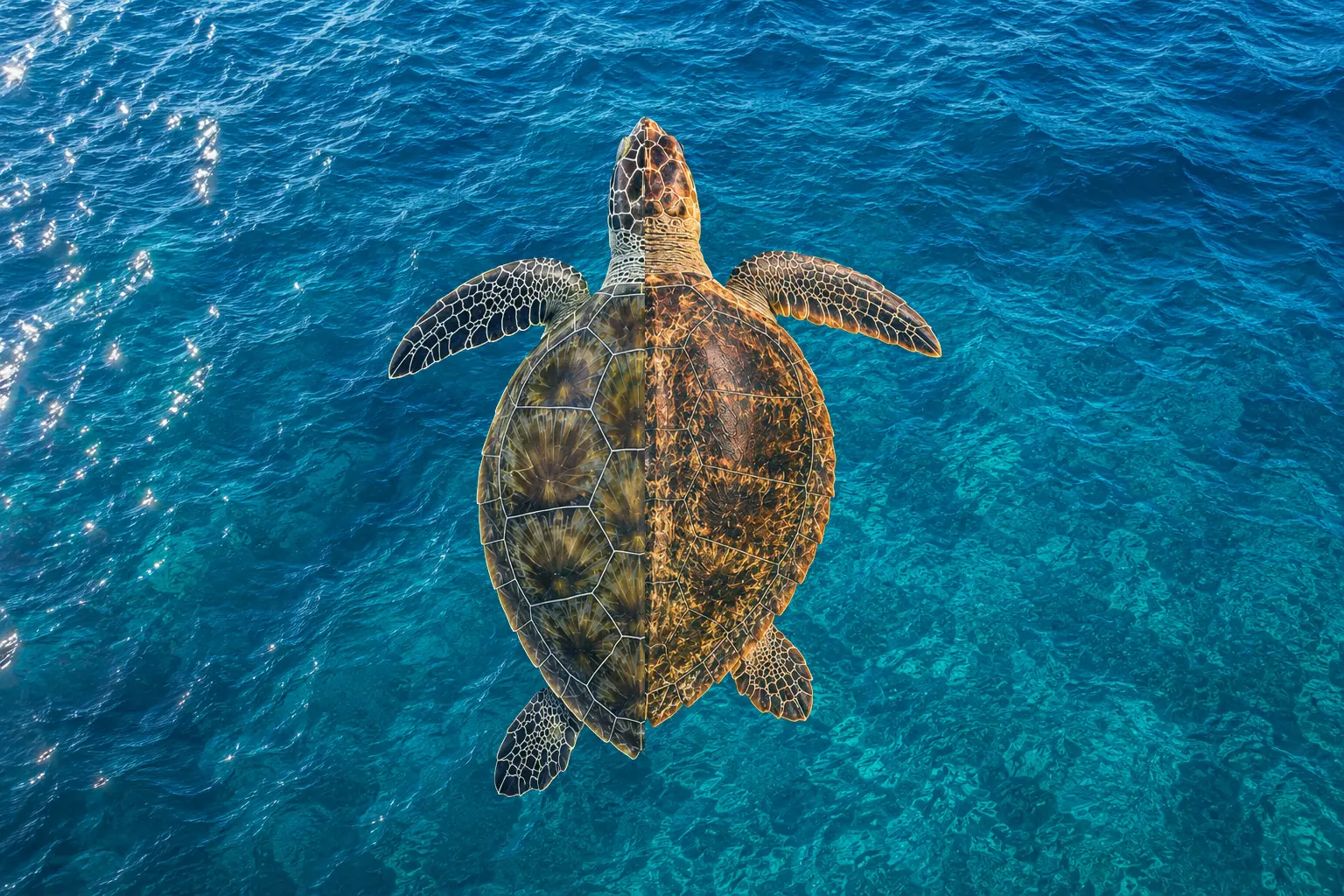
Green (Chelonia mydas) vs. Loggerhead (Caretta caretta)
Tortuga Verde vs. Caguama
Read More →