
Green (Chelonia mydas) vs. Loggerhead (Caretta caretta): Know Your Nesting Species
Tortuga Verde (Chelonia mydas) vs. Caguama (Caretta caretta)
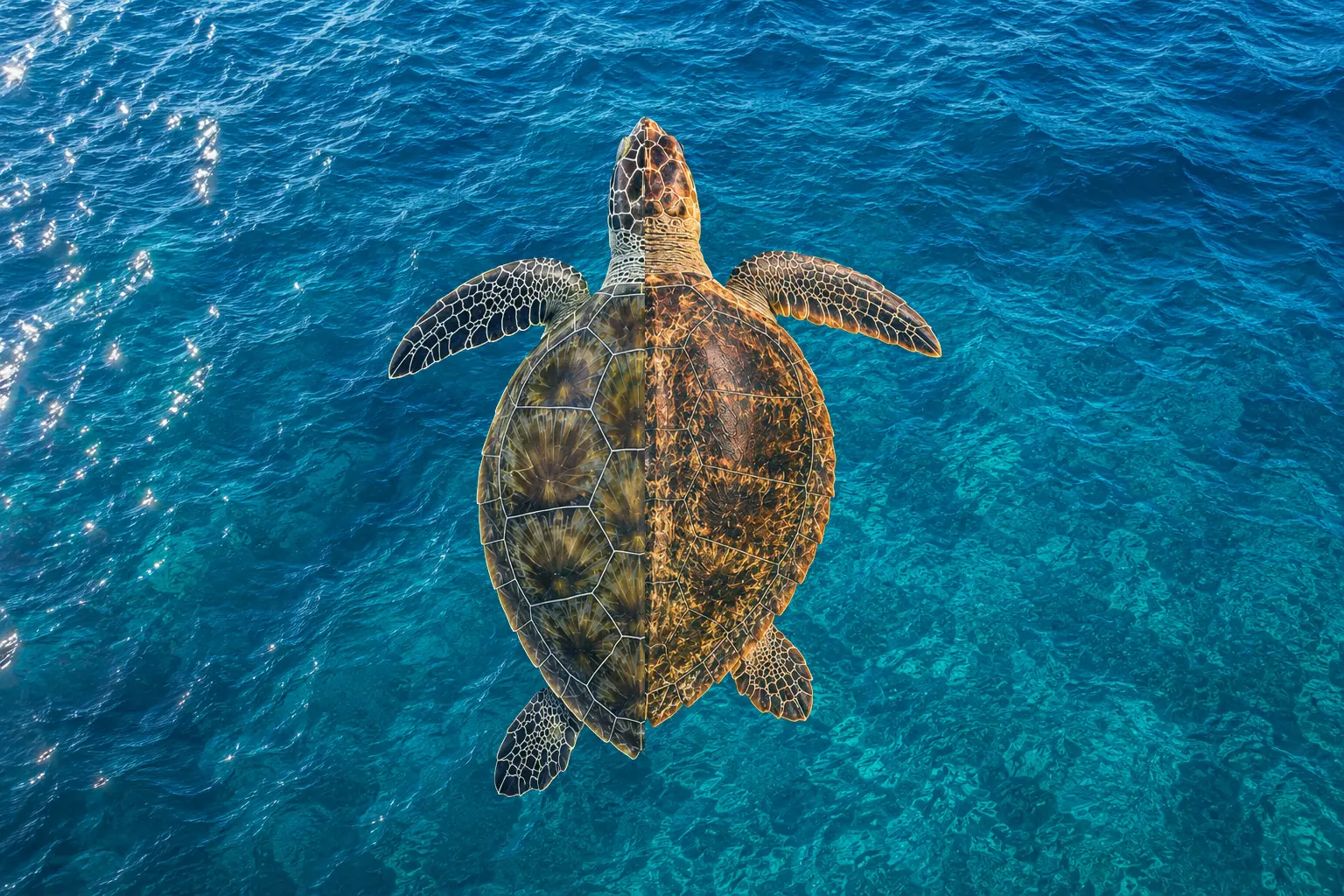
Two species share our stretch of beach in Akumal, and both are protected under Mexico’s official NOM-059-SEMARNAT-2010 as endangered species. Once you know what to look for, telling them apart is easier than it sounds.
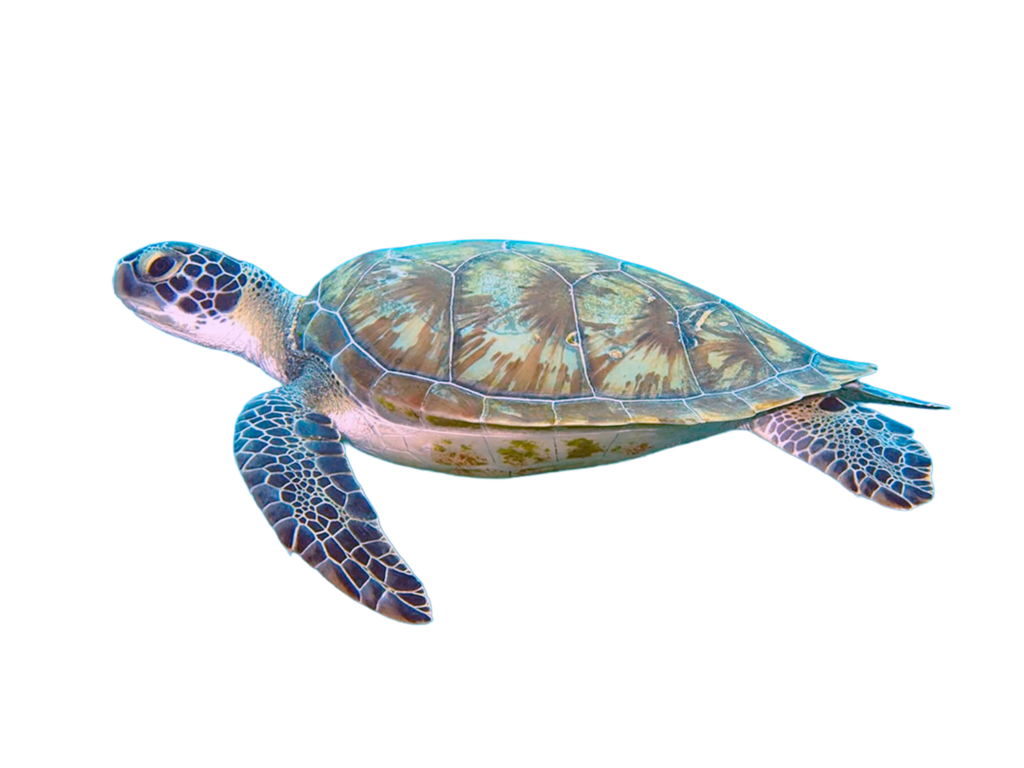
The green turtle (Chelonia mydas), or tortuga verde, is the more frequent nester on our beach. She’s common in the seagrass beds just offshore; she has a small head relative to her body, with a rounded profile, and a serrated lower jaw—an adaptation for cutting seagrass and algae, her main diet. The top of her head and flippers are olive-green, while her underside ranges from white or cream to olive-gray or bluish. In Quintana Roo, adult green turtles average 106.6 cm in shell length and 155 kg in weight.
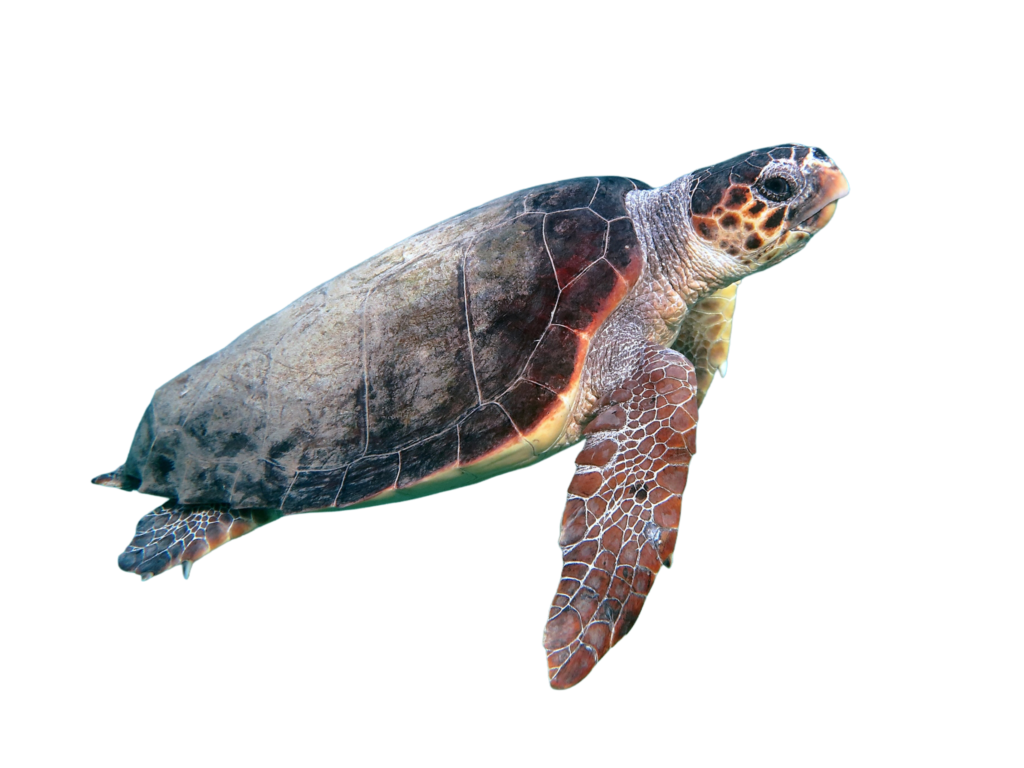
The loggerhead (Caretta caretta), known locally as caguama, nests less often on our beach. She’s carnivorous throughout her life: her head is large and triangular—about 19 cm wide—with powerful jaws built to crush the shells of large mollusks. Her shell is reddish-brown on top and yellow-to-orange underneath. In Quintana Roo, adult loggerheads average 100 cm in curved shell length and 136 kg in weight, slightly smaller than the green turtle.
Nesting season
Green turtles nest from June to September, peaking in June and July, but renest fewer times per season—an average of 3, ranging from 1 to 8, spaced 12 to 15 days apart—while laying more eggs per nest: 123 on average, in a range of 32 to 204. Loggerheads nest from May to September—sometimes starting as early as April—also peaking in June and July; a single female can lay up to 400 eggs in a season, spread across an average of 4 nests of 100 eggs each. Both species return to the same nesting sites every 2 to 3 years.
| Characteristic | Green turtle (Chelonia mydas) | Loggerhead (Caretta caretta) |
|---|---|---|
| 🐢 Species | Green turtle | Loggerhead |
| 🔬 Scientific name | Chelonia mydas | Caretta caretta |
| 👁️ Prefrontal scales | 1 pair | 2 pairs |
| 🛡️ Carapace | Smooth and rounded | More elongated, with reddish-brown tones |
| 〜 Posterior margin | Smooth, no serrations | Serrated |
| 🍽️ Diet | Herbivore (seagrass and algae) | Carnivore (crustaceans, mollusks, and fish) |
| 📏 Adult size | 80–120 cm curved carapace length | 80–110 cm curved carapace length |
| ⚖️ Adult weight | 100–200 kg | 100–180 kg |
Both species are classified as “Endangered” by the International Union for Conservation of Nature (IUCN), and both are protected under Mexico’s NOM-059-SEMARNAT-2010. That’s why every nest we document—regardless of species—becomes part of a record that helps protect both populations. You can meet both species up close on our Sea Turtle Program page, and find the full data set in CONANP’s official Species Conservation Action Program (PACE) for the Loggerhead (Caretta caretta) and for the Green turtle (Chelonia mydas).
Source: SEMARNAT/CONANP/UNDP, Species Conservation Action Programs—Loggerhead Sea Turtle (Caretta caretta) and Green/Black Sea Turtle (Chelonia mydas), 2018.
Dos especies comparten nuestro tramo de playa en Akumal, y ambas están protegidas por la Norma Oficial Mexicana NOM-059-SEMARNAT-2010 como especies en peligro de extinción. Una vez que sabes qué buscar, distinguirlas es más fácil de lo que parece.
La tortuga verde (Chelonia mydas) es la que anida con más frecuencia en nuestra playa. Es común en los pastos marinos justo frente a la costa; tiene la cabeza pequeña en proporción al cuerpo, con un perfil redondeado, y el borde de su mandíbula inferior es aserrado—una adaptación que le permite cortar fácilmente pastos marinos y algas, su dieta principal. La superficie dorsal de su cabeza y aletas es de color verde oliva, mientras que el plastrón varía del blanco o crema al gris-oliva o azulado. En Quintana Roo, los ejemplares adultos promedian 106.6 cm de largo de caparazón y 155 kg de peso.
La caguama (Caretta caretta) anida con menos frecuencia en nuestra playa. Es carnívora durante todo su ciclo de vida: su cabeza es grande y triangular—de unos 19 cm de ancho—con mandíbulas fuertes capaces de triturar las conchas de moluscos grandes. Su caparazón es de color café-rojizo por arriba y amarillo-naranja por abajo. En Quintana Roo, los ejemplares adultos promedian 100 cm de largo de caparazón (curvo) y 136 kg de peso, ligeramente menores que la tortuga verde.
Temporada de anidación
La tortuga verde anida de junio a septiembre, con mayor actividad en junio y julio, pero reanida pocas veces por temporada—3 en promedio, de 1 a 8 puestas, con 12 a 15 días entre cada una—y deposita más huevos por nido: 123 en promedio, en un rango de 32 a 204. La caguama anida de mayo a septiembre—aunque puede empezar desde abril—, también con su pico en junio y julio; puede desovar hasta 400 huevos en una temporada, repartidos en un promedio de 4 nidadas de 100 huevos cada una. Ambas especies regresan a los mismos sitios de anidación cada 2 a 3 años.
| Característica | Tortuga verde (Chelonia mydas) | Tortuga caguama (Caretta caretta) |
|---|---|---|
| 🐢 Especie | Tortuga verde | Tortuga caguama |
| 🔬 Nombre científico | Chelonia mydas | Caretta caretta |
| 👁️ Escamas prefrontales | 1 par | 2 pares |
| 🛡️ Caparazón | Liso y redondeado | Más alargado y con tonos café rojizos |
| 〜 Borde posterior | Liso, sin sierras | Con sierras |
| 🍽️ Alimentación | Herbívora (pastos marinos y algas) | Carnívora (crustáceos, moluscos y peces) |
| 📏 Tamaño adulto | 80–120 cm de longitud curva del caparazón | 80–110 cm de longitud curva del caparazón |
| ⚖️ Peso adulto | 100–200 kg | 100–180 kg |
Ambas especies están clasificadas como “En Peligro” por la Unión Internacional para la Conservación de la Naturaleza (UICN), además de estar protegidas por la NOM-059-SEMARNAT-2010 en México. Por eso cada nido que documentamos—sin importar la especie—forma parte de un registro que ayuda a entender y proteger a ambas poblaciones. Puedes conocer más de cerca a ambas especies en nuestra página de Programa de Tortugas Marinas, y encontrar el Programa de Acción para la Conservación de la Especie (PACE) oficial de CONANP para la caguama (Caretta caretta) y para la tortuga verde (Chelonia mydas).
Fuente: SEMARNAT/CONANP/PNUD, Programas de Acción para la Conservación de la Especie—Tortuga Caguama (Caretta caretta) y Tortuga Verde/Negra (Chelonia mydas), 2018.
MORE FROM THE JOURNAL
What It Means to Be a Sea Turtle Volunteer
Ser Voluntaria Tortuguera
Read More →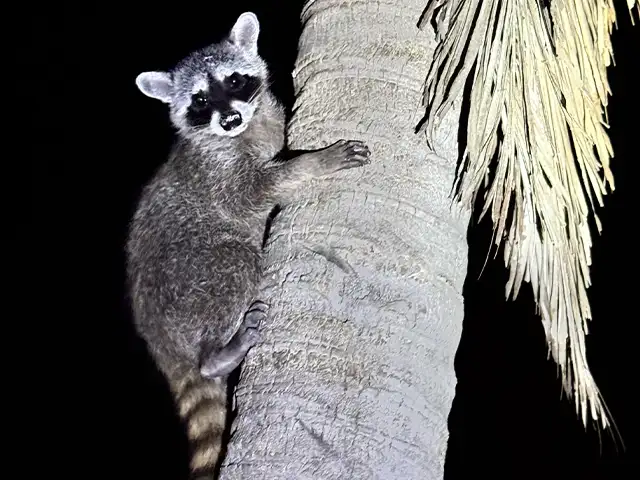
The Raccoon of Akumal (Procyon lotor)
El Mapache de Akumal
Read More →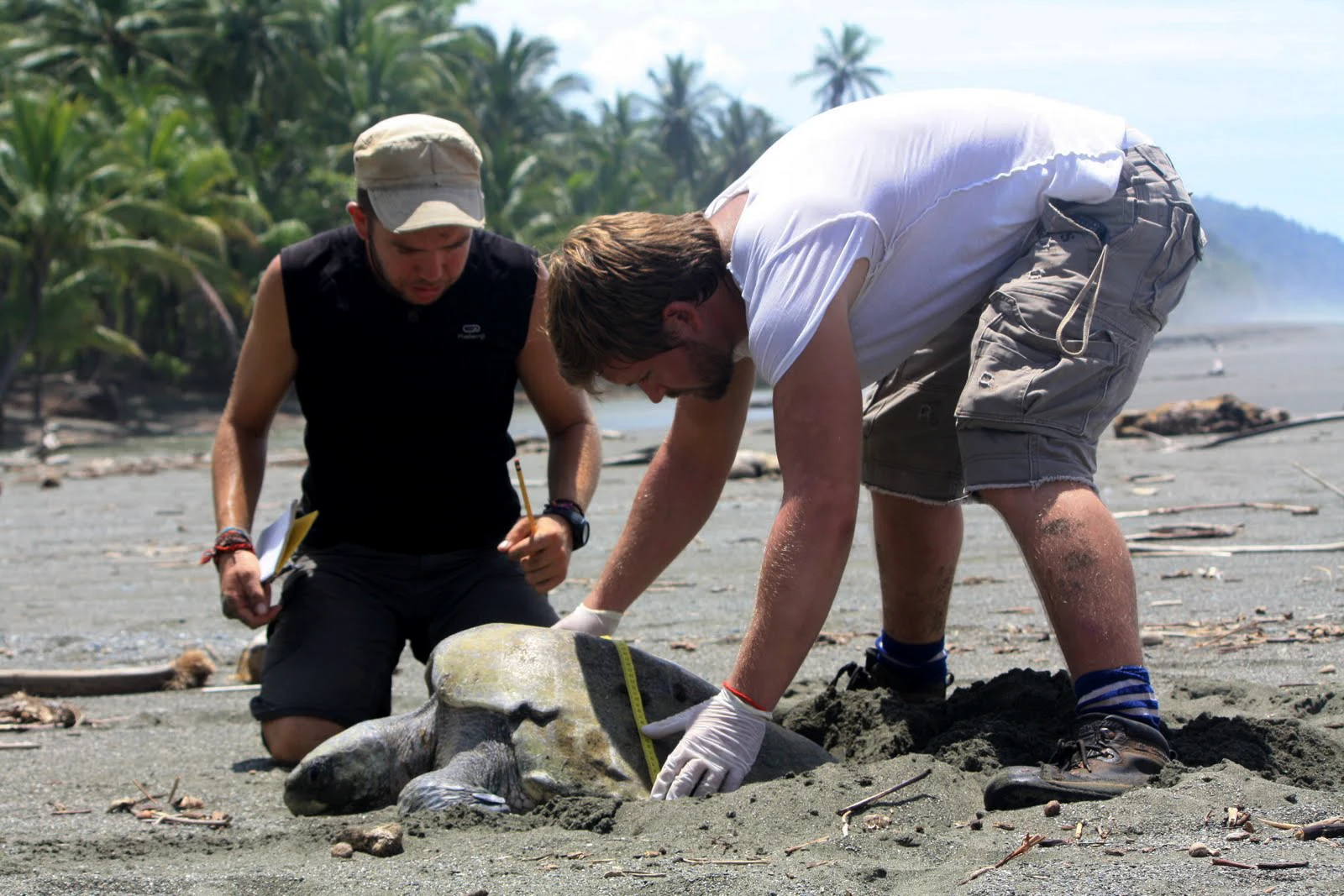
Inside the SAVE Field Guide
Dentro de la Guía de Campo SAVE
Read More →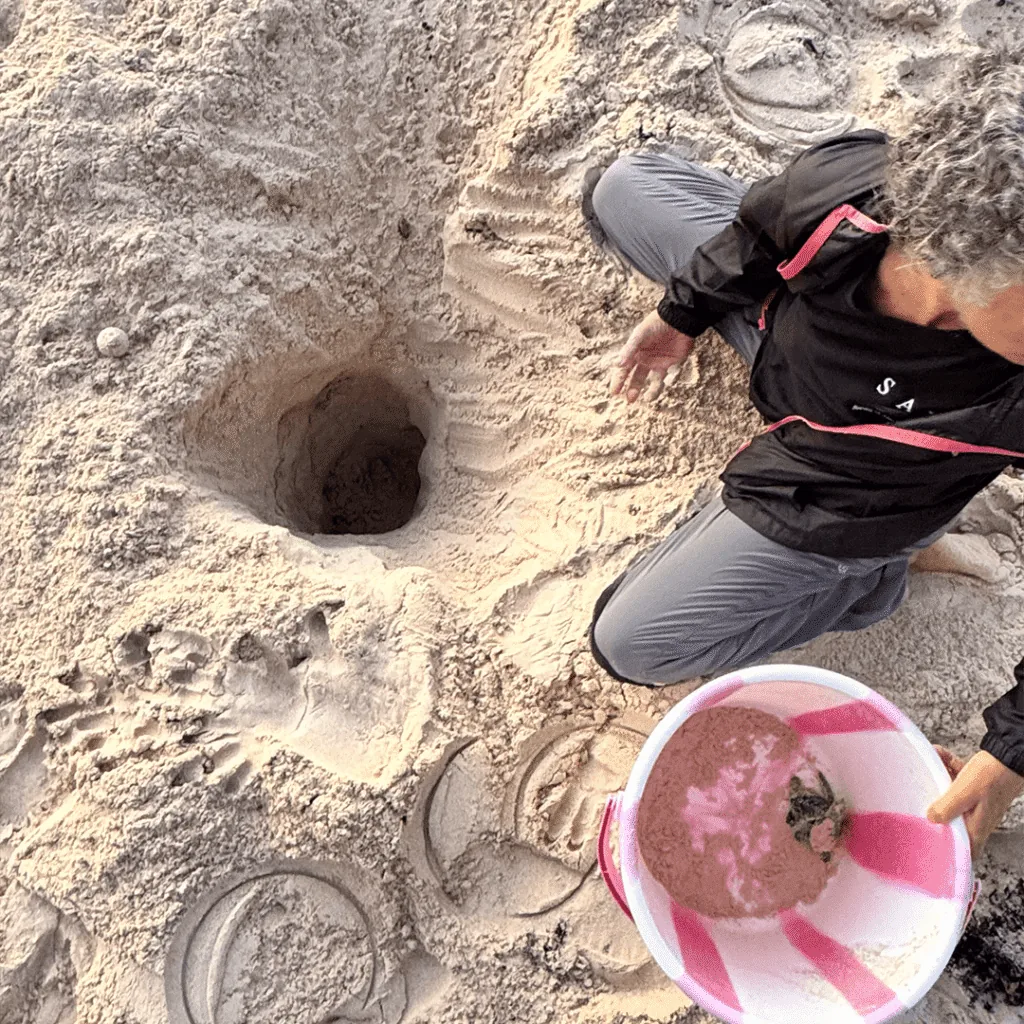
Why Every Nest Counts
Por Qué Cada Nido Cuenta
Read More →