
What It Means to Be a Sea Turtle Volunteer
Ser Voluntaria Tortuguera
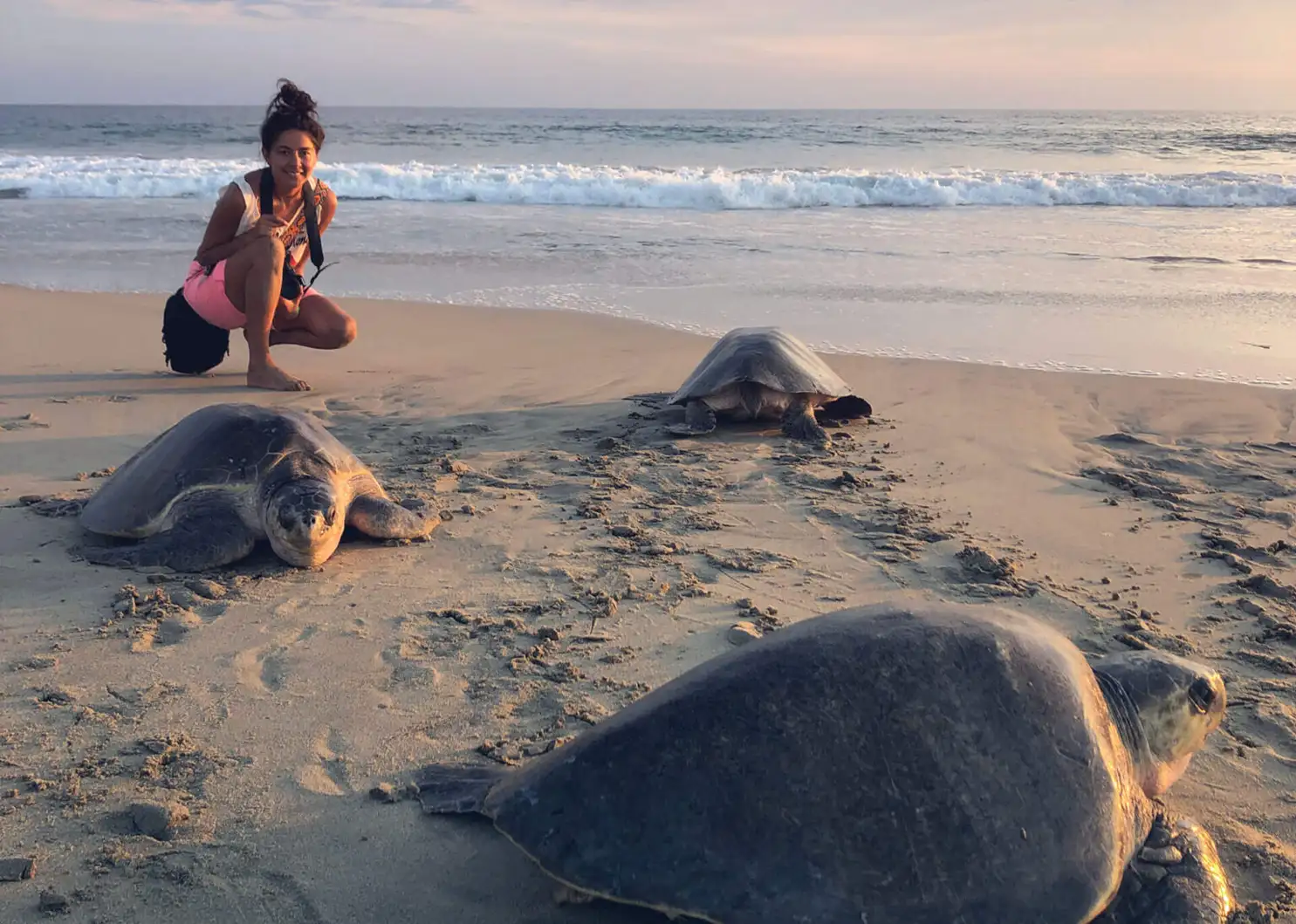
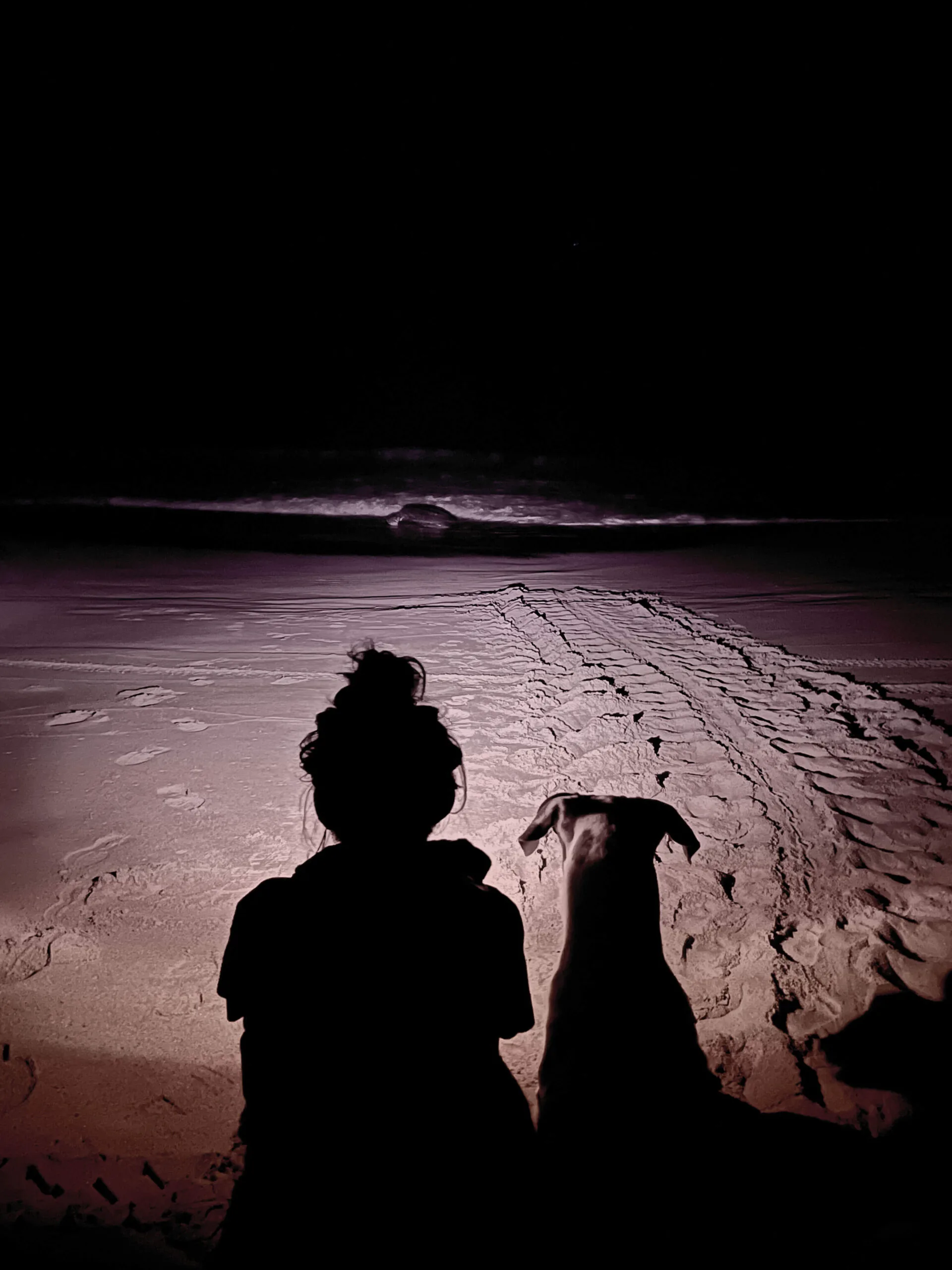
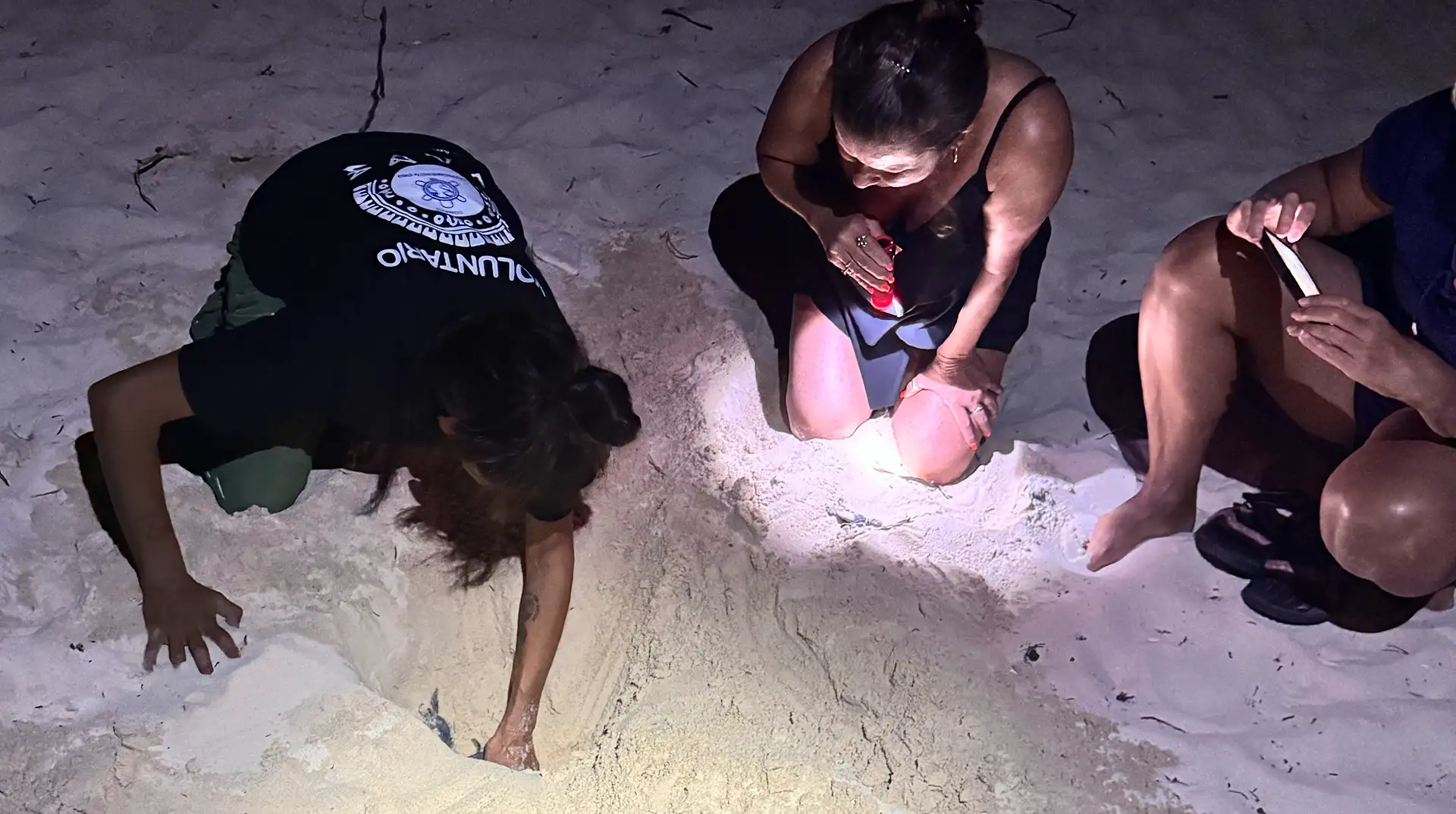
My story with sea turtles began in 2021, on the beaches of Oaxaca. I was traveling with Harley, my great dane, and at night, out enjoying the beach, the turtles started to appear: first in Zicatela, then in Chacahua, but the best encounters were at Playa Delfín, just ten minutes from Puerto Escondido. That’s where I met Leslie, the biologist in charge of Campamento Palmarito, who invited me to join as a volunteer. She, along with Alisson, Abi, and Don Tino — quite a character — taught me everything they knew about turtles: how to prepare for a night patrol, what equipment to use and how to handle it properly, how to follow a track, how to tell tracks apart by shape and size, how to find the mouth of a nest, how to recover the eggs, and how to relocate them into the hatchery to protect them.
Campamento Tortuguero Palmarito was my first experience as a turtle volunteer, and I will always be grateful for that gift life gave me. Playa Delfín is long and wide, patrolled by ATV given its length, and every nest is kept safe in the hatchery. It was here that I met a true living dinosaur: the leatherback turtle (Dermochelys coriacea).
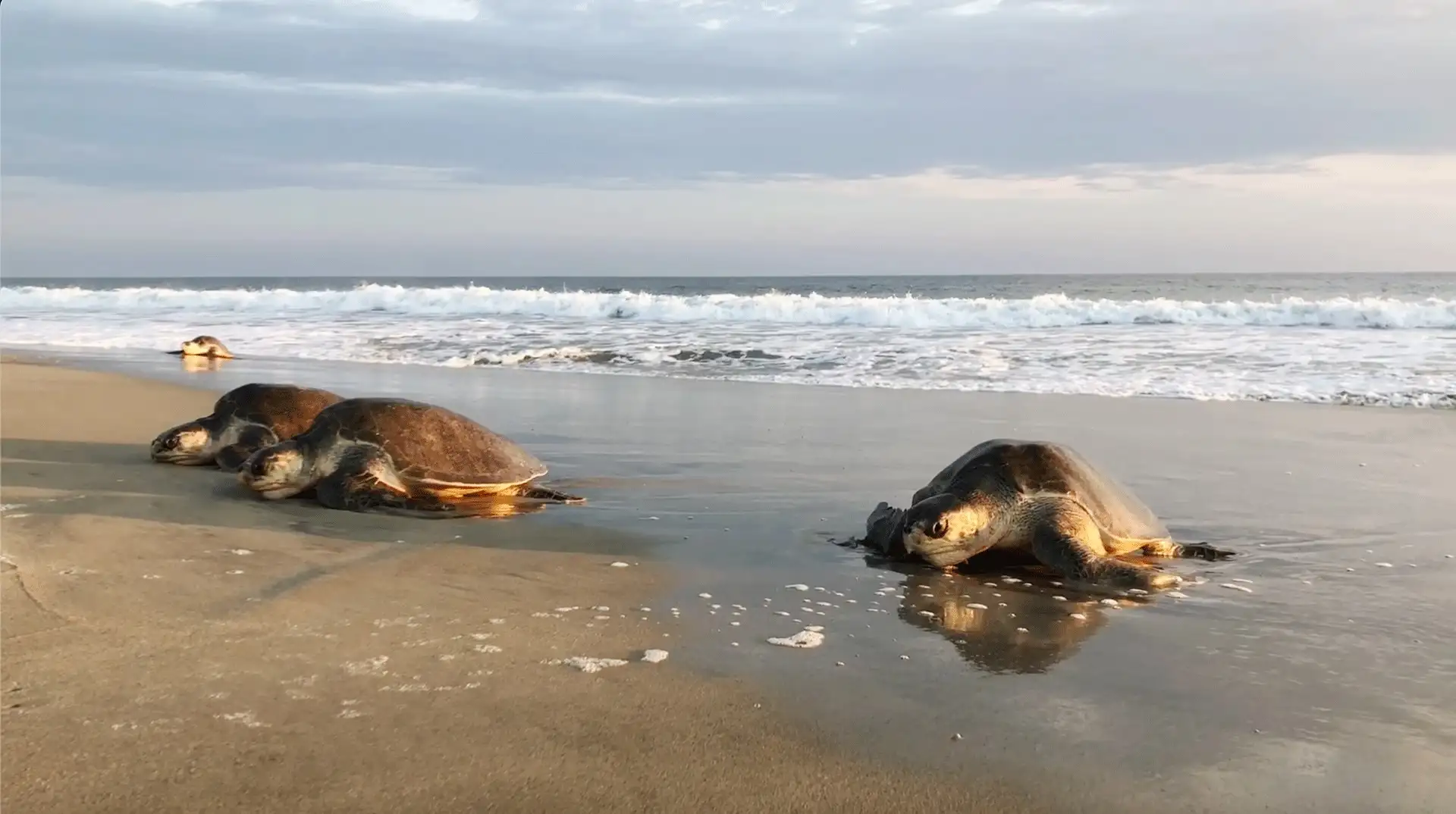
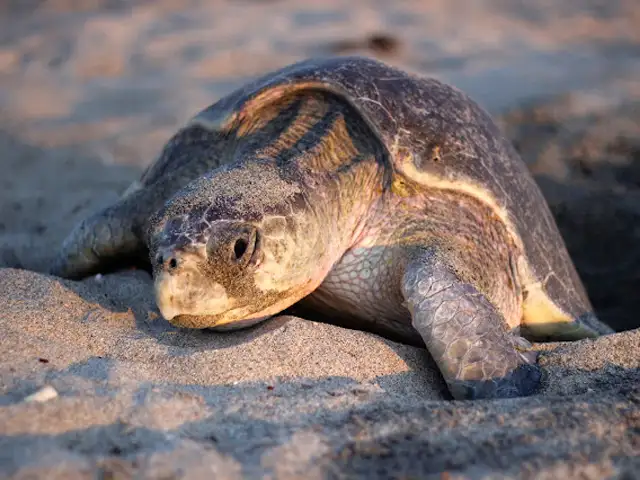
Some time later, I had the chance to visit the sanctuary at Playa Escobilla, in the town of Santa María Tonameca, also in Oaxaca. This place is of huge importance, as it’s one of the few beaches in the world where mass nesting arribadas of the olive ridley turtle (Lepidochelys olivacea) take place, with thousands of turtles arriving to nest. It’s incredible to watch them come and go from the sea, non-stop, day and night, for around five days straight. This site is a Protected Natural Area under the Mexican government.
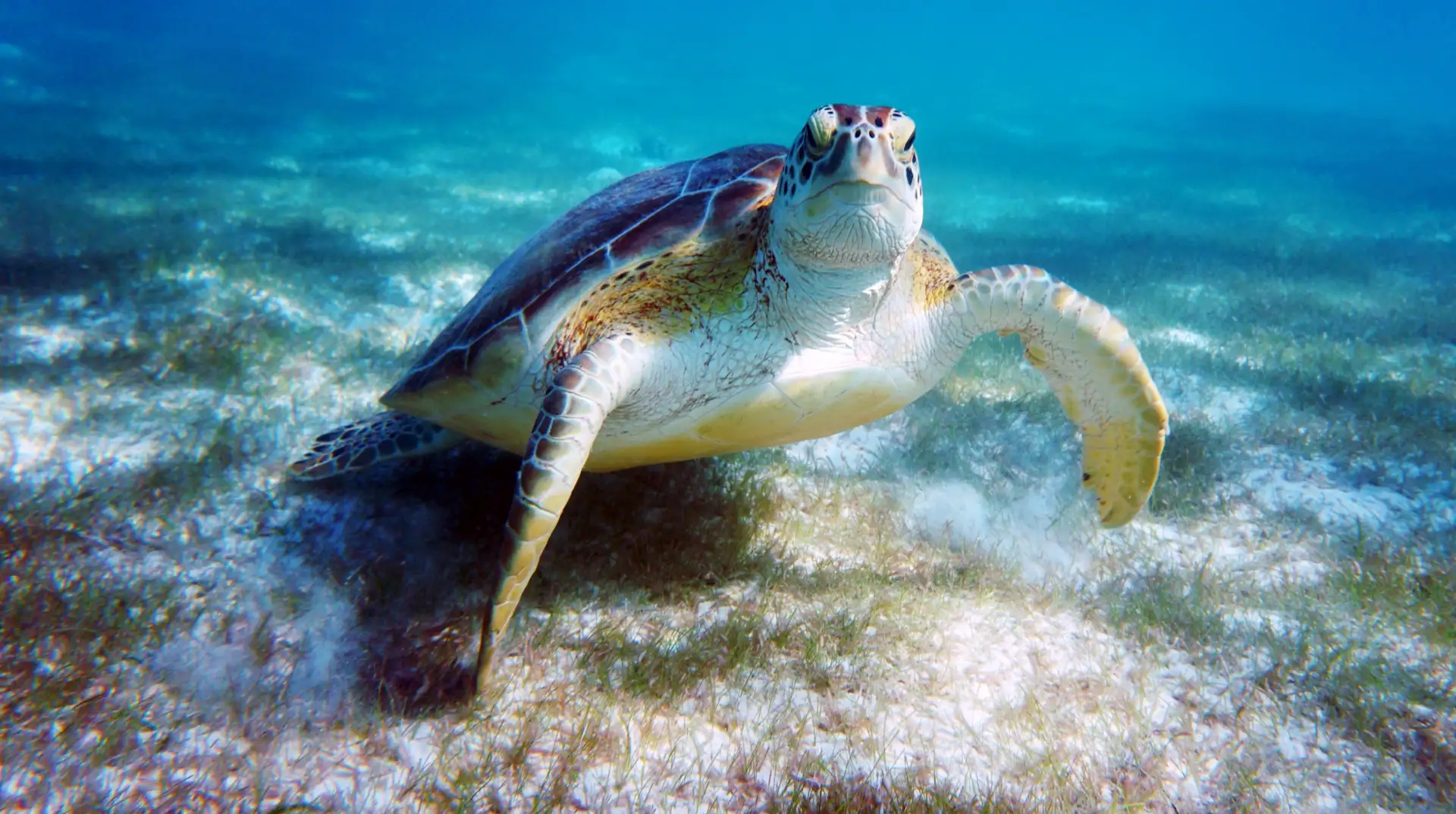
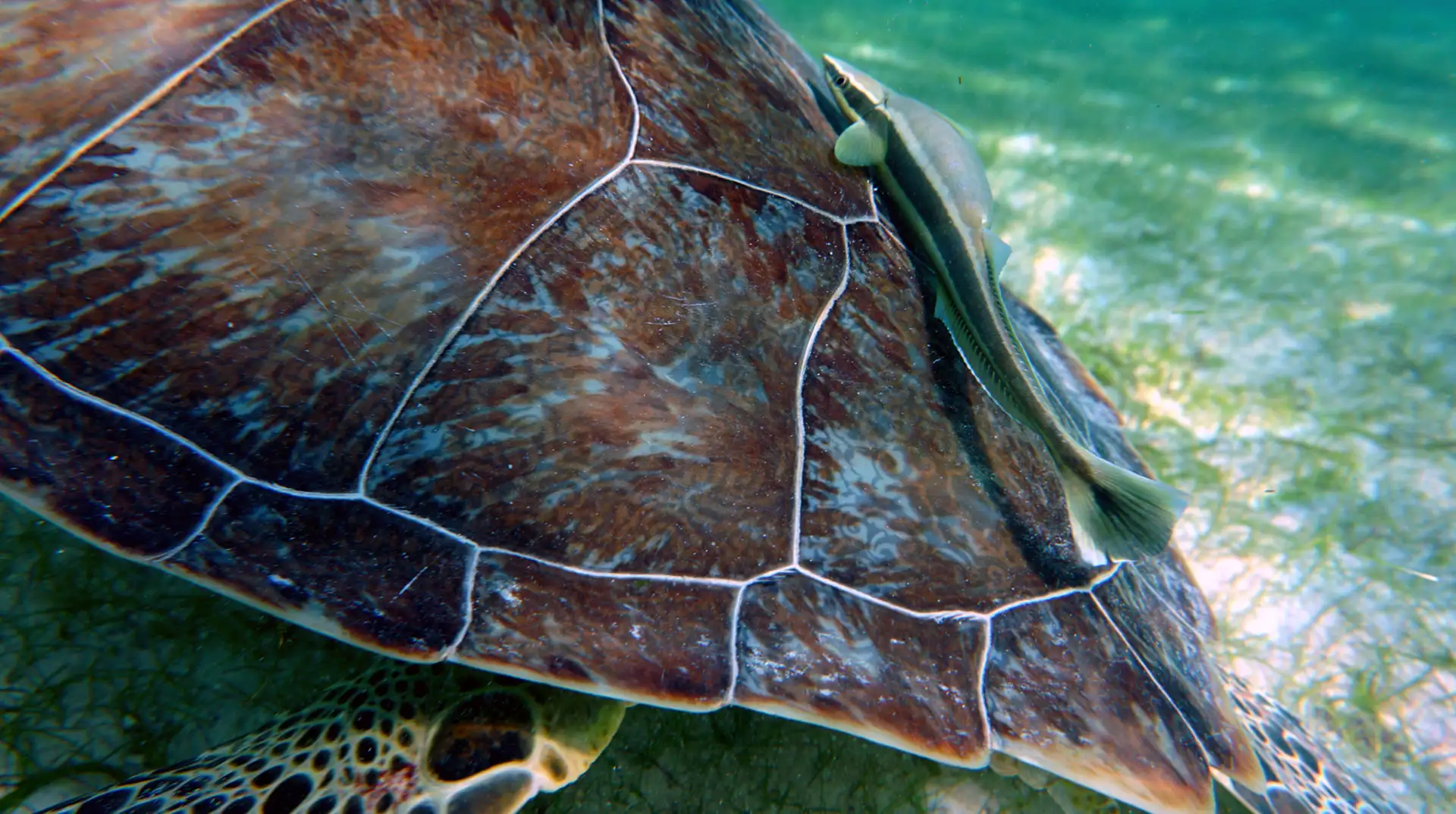
Last but not least, I met the green turtle (Chelonia mydas). Fortunately, this species’ population has grown in recent years, moving its Red List status from “endangered” to “least concern.”
Finding My Way Back to the Sea
I was born in what was then Distrito Federal, now Mexico City, but for as long as I can remember, the beach has been my favorite destination. I’ve been a certified diver since 2010, and I truly believe the ocean is the most incredible thing on this planet. In 2014, I tried studying Marine Biology as a second degree at UABCS, and even though science was never my strength, I never drifted far from the sea, and eventually moved to live in Yucatán.
On one of my diving trips, I discovered that in Akumal Bay I could swim with turtles just by wading in with my snorkel gear. It was magical. I managed to take a few photographs, and there’s one in particular that’s my favorite, “Angry Turtle,” taken maybe 10 years ago now.
Back to Akumal, as a Volunteer Again
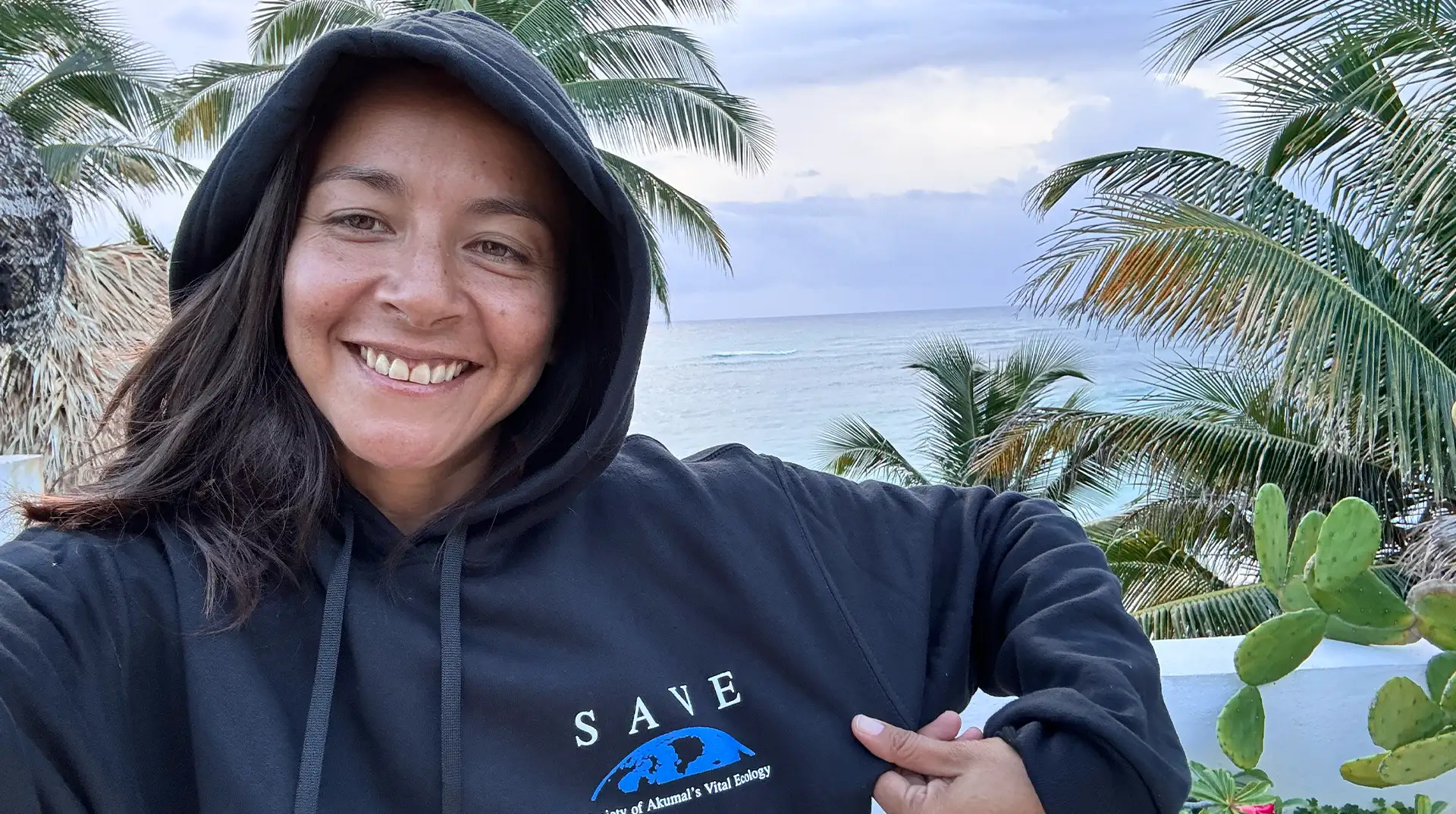
Last year, in 2025, a new opportunity to volunteer with sea turtles brought me back to Akumal. S.A.V.E. Akumal crossed my path, and Nancy de Rosa, the camp’s director, became a personal example, inspiring me to act “without having to,” even though deep down I believe everyone “should” take care of the planet we live on. But unfortunately, that’s not how it works: only some people are willing to invest resources, time, patience, and work, with nothing but the personal satisfaction of having helped as their reward.
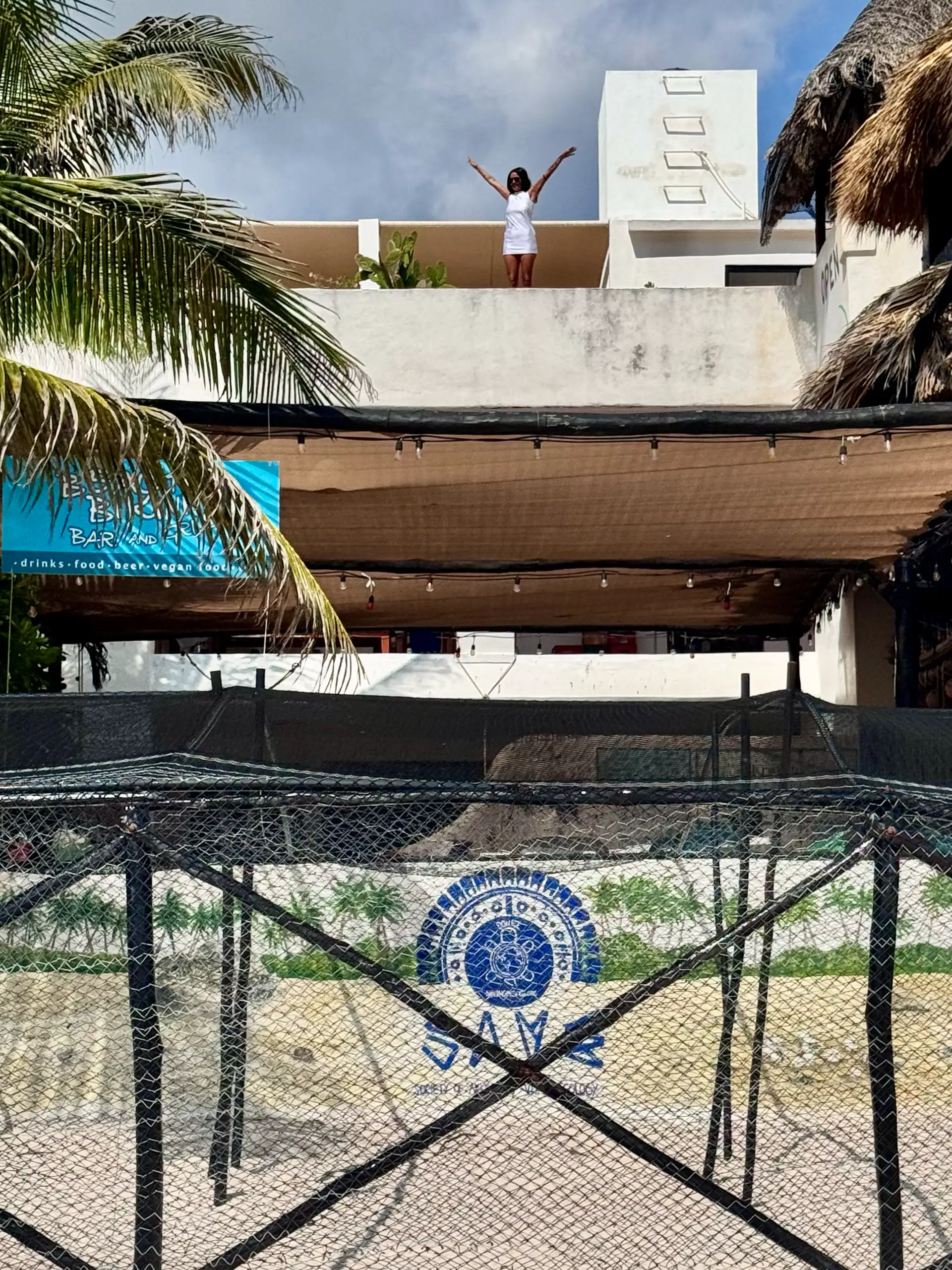
Aventuras Akumal sits on the Caribbean coast, in Quintana Roo, and has a long history tied to sea turtle nesting. On this beach I met a species that was new to me, the loggerhead turtle (Caretta caretta). I really enjoy noticing the differences between each species.
Volunteering with SAVE has been deeply rewarding, but also complicated. As the days go by, each night’s work gets heavier. The effort changes day to day, and physical and emotional exhaustion set in. We protect almost a kilometer of beach every night, for more than seven months, with the help of every volunteer we can get.
Nancy gave me the opportunity to coordinate the 2026 turtle season, and that’s been a huge challenge too: planning the work, social media, the website, staying in touch with volunteers, field needs, materials, problem-solving, keeping calm. I ended up taking on a responsibility I hadn’t expected, trying to understand other people’s needs and concerns while, at the same time, getting things wrong along the way.
What I Learned About Volunteering
I understood that volunteering isn’t a single gesture, but many different gestures that barely resemble one another. I understood that some people give a weekend, and others give a month or an entire season. I understood that some travel from another country chasing an experience, backpack and curiosity leading the way, and that, at its best, it stops being tourism and becomes real work — the kind where you don’t just give your time but also receive shelter, food, and knowledge; you learn that helping and being helped can happen at the same time.
Arriving at a conservation camp, no matter how beautiful it is, has never been easy, and getting to know strangers you’ll live with for at least a month is even harder: my routine stops being mine and becomes the team’s routine, with the turtles’ routine as the priority — their nesting schedules, their nesting zones, their hatchlings that need protecting from raccoons and from tourists who don’t realize they’re stepping on a nest.
A Brief History of Volunteering
Doing some research, I learned that volunteering became an institution as far back as the Middle Ages, with the first hospitals that treated anyone free of charge. But the moment that shaped it into what we know today happened in 1859, in Solferino, when Henry Dunant came across thousands of wounded soldiers with no one to care for them and organized the townspeople to treat them regardless of which side they fought for. That’s where the Red Cross was born, and with it, the idea that anyone can help without being asked to.
Source: International Committee of the Red CrossOver the years, volunteering multiplied, no longer tied only to disasters but becoming a way of life, an exchange program, part of growing up and getting to know the world. And today, with a single search online, anyone can find a sea turtle conservation project, a rural school, or an animal shelter, waiting for hands to help.
The Problem With “Vacation With a Cause”
But that’s also where the problem lies. Because for some, volunteering has become a pretty photo for social media, a couple of days of “feeling good about it,” and that does real damage to what actually matters: the seriousness of the commitment. A turtle doesn’t choose when to nest. A nest doesn’t wait for a volunteer to feel like going out that night, or for them to keep their word about being there on the beach, watching, protecting. When someone shows up thinking this is a vacation with a cause instead of a responsibility, someone else ends up carrying what that person left half-done: in this case, the turtles and their hatchlings.
It isn’t easy. It hurts to see a nest preyed on after weeks of caring for it, but I come back anyway, because there’s a kind of satisfaction unlike any other: knowing that a hatchling made it to the sea, in part, because I was there that night. No one will ever thank me for it. The turtle doesn’t know my name.
But I know hers.
— Yaz Ayuso
Want to become a sea turtle volunteer?
Learn About Our Volunteer ProgramMi historia con las tortugas empezó en 2021, en las playas de Oaxaca. Viajaba con Harley, mi gran danés, y en las noches, disfrutando la playa, las tortugas empezaron a aparecer: primero en Zicatela, después en Chacahua, pero el mejor contacto fue en Playa Delfín, a no más de diez minutos de Puerto Escondido. Ahí conocí a Leslie, una bióloga responsable del campamento Palmarito, quien me invitó a participar como voluntaria. Ella, Alisson, Abi y Don Tino —un gran personaje— me enseñaron todo lo que sabían acerca de las tortugas: cómo preparar la noche de patrullaje, el equipo que debía utilizar y la manera adecuada de manipularlo, cómo seguir un rastro, cómo diferenciarlo dependiendo de su forma y tamaño, cómo encontrar la boca de un nido, cómo recuperar los huevos y cómo recolocarlos dentro del vivero para protegerlos.
El Campamento Tortuguero Palmarito fue mi primera experiencia como voluntaria tortuguera y siempre estaré muy agradecida con ese regalo de la vida. La Playa Delfín es muy larga y amplia, se patrulla en cuatrimoto por la extensión, y todos los nidos se resguardan en el vivero. Fue aquí donde conocí a un verdadero dinosaurio: la tortuga laúd (Dermochelys coriacea).
Tiempo después tuve la oportunidad de asistir al Santuario de Playa Escobilla, en el poblado Santa María Tonameca, también en Oaxaca. Este lugar es de gran importancia por ser una de las playas a nivel mundial en las que se presentan arribazones de miles de tortugas marinas de la especie golfina (Lepidochelys olivacea), que llegan a sus playas para anidar. Es increíble observar cómo las tortugas no paran de ir y venir del mar durante todo el día y la noche, durante aproximadamente unos cinco días. Este lugar es un Área Natural Protegida por el Gobierno de México.
Por último, pero no menos importante, conocí a la tortuga verde (Chelonia mydas). Afortunadamente, esta especie ha aumentado su población en los últimos años, cambiando su categoría en la lista roja de “en peligro” a “preocupación menor.”
De vuelta al mar
Nací en el Distrito Federal, hoy llamado Ciudad de México, pero desde que recuerdo, la playa ha sido mi destino favorito. Soy buzo con certificación desde 2010 y realmente creo que el mar es lo más increíble que existe en este planeta. En 2014 intenté estudiar Biología Marina como segunda carrera en la UABCS, y aunque la ciencia no es mi fuerte, nunca me alejé del mar y me mudé a vivir a Yucatán.
En alguno de mis viajes de buceo descubrí que en la bahía de Akumal podía nadar con las tortugas, adentrándome únicamente con mi equipo de snorkel. Era mágico. Pude tomar algunas fotografías y hay una en especial que es mi preferida, “Tortuga enojada,” eso fue hace quizá unos 10 años.
De vuelta a Akumal, otra vez como voluntaria
El año pasado, 2025, una nueva oportunidad para ser voluntaria tortuguera me llevó de vuelta a Akumal. S.A.V.E. Akumal se cruzó en mi vida y Nancy de Rosa, directora del campamento, se volvió un ejemplo personal, inspirándome a hacer “sin deber,” aunque en el fondo considero que todos “deberíamos” cuidar este planeta en el que vivimos. Pero, desafortunadamente, no es así: solo algunos están dispuestos a invertir recursos, tiempo, paciencia y trabajo, con solo la satisfacción personal de haber ayudado como retribución.
Aventuras Akumal se encuentra en la costa del Caribe, en Quintana Roo, y tiene una gran historia relacionada con la anidación de tortugas. En esta playa conocí a una especie nueva para mí, la tortuga caguama o boba (Caretta caretta). Disfruto mucho ver la diferencia entre cada especie.
Ser voluntaria en SAVE ha sido muy reconfortante, pero también complicado. Con el paso de los días, el trabajo de cada noche se vuelve más pesado. El esfuerzo cambia día con día y el cansancio físico y emocional se hacen presentes. Protegemos casi un kilómetro de playa cada noche, durante más de siete meses, con ayuda de todos los voluntarios posibles.
Nancy me dio la oportunidad de coordinar la Temporada de tortugas 2026, y ha sido también un gran reto: planear el trabajo, las redes sociales, la página web, el contacto con los voluntarios, las necesidades en el campo, los materiales, la solución de problemas, mantener la calma. Terminé encontrando una responsabilidad que no esperaba, tratando de comprender las necesidades e inquietudes de las otras personas y, al mismo tiempo, equivocándome.
Lo que aprendí sobre el voluntariado
Comprendí que el voluntariado no es un solo gesto, sino muchos gestos distintos que se parecen poco entre sí. Comprendí que hay quien dona un fin de semana y quien dona un mes o una temporada completa. Comprendí que hay quien viaja desde otro país buscando una experiencia, con la mochila y la curiosidad por delante, y que en el mejor de los casos deja de ser turismo para volverse trabajo real, ese donde no solo das tiempo sino que también recibes techo, comida y conocimiento; aprendes que ayudar y ser ayudada pueden suceder al mismo tiempo.
Llegar al campamento de conservación, por más hermoso que sea, no ha sido fácil, y conocer a los extraños con los que vivirás por lo menos un mes mucho menos: mi rutina deja de ser mía para volverse la rutina del equipo, teniendo como prioridad la rutina de las tortugas, sus horarios de desove, sus zonas de anidación, sus crías que hay que proteger de los mapaches y de los turistas que no saben que están pisando un nido.
Una breve historia del voluntariado
Investigando, descubrí que el voluntariado se institucionalizó desde la Edad Media, con los primeros hospitales que atendían a cualquiera sin cobrar. Pero el momento que lo marca tal como lo conocemos hoy fue en 1859, en Solferino, cuando Henry Dunant encontró miles de soldados heridos sin nadie que los atendiera y organizó al pueblo para curarlos sin importar el bando. Ahí nació la Cruz Roja, y con ella, la idea de que cualquiera puede ayudar sin que se lo pidan.
Fuente: Comité Internacional de la Cruz RojaCon los años el voluntariado se multiplicó, ya no solo en catastrofes sino como forma de vida, como programas de intercambio, como parte de crecer y de conocer el mundo. Y hoy, con una búsqueda en internet, cualquiera puede encontrar un proyecto de conservación de tortugas marinas, una escuela rural, o un albergue de animales, esperando manos.
El problema de las “vacaciones con causa”
Pero ahí está también el problema. Porque el voluntariado se ha vuelto, para algunos, una foto bonita para las redes, un par de días de “buena conciencia,” y eso le hace daño a lo que de verdad importa: la seriedad del compromiso. Una tortuga no elige cuándo desovar. Un nido no espera a que el voluntario tenga ganas de salir esa noche, o a que cumpla su palabra de estar ahí en la playa, cuidando, protegiendo. Cuando alguien llega pensando que esto son unas vacaciones con causa y no una responsabilidad, alguien más termina cargando lo que esa persona dejó a medias: en este caso, las tortugas y sus crías.
No es fácil. Duele ver un nido depredado después de semanas de cuidarlo, pero aun así vuelvo, porque hay una satisfacción que no se parece a ninguna otra: la de saber que una cría de tortuga que llegó al mar lo hizo, en parte, porque yo estuve ahí esa noche. Nadie me lo va a agradecer. La tortuga no sabe mi nombre.
Pero yo sí sé el suyo.
— Yaz Ayuso
¿Quieres ser voluntaria o voluntario tortuguero?
Conoce Nuestro Programa de VoluntariadoMORE FROM THE JOURNAL
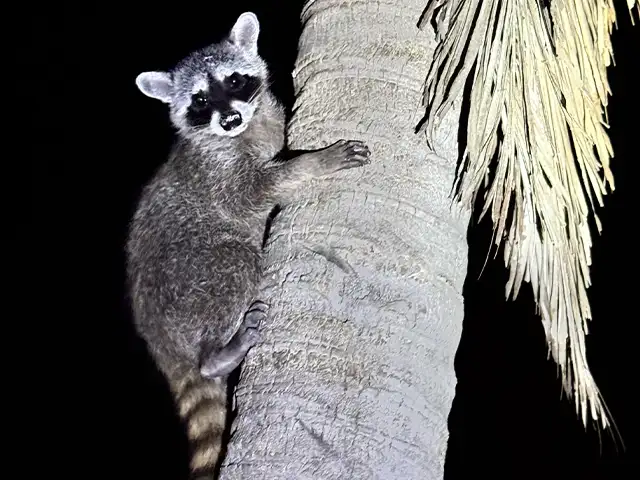
The Raccoon of Akumal (Procyon lotor)
El Mapache de Akumal
Read More →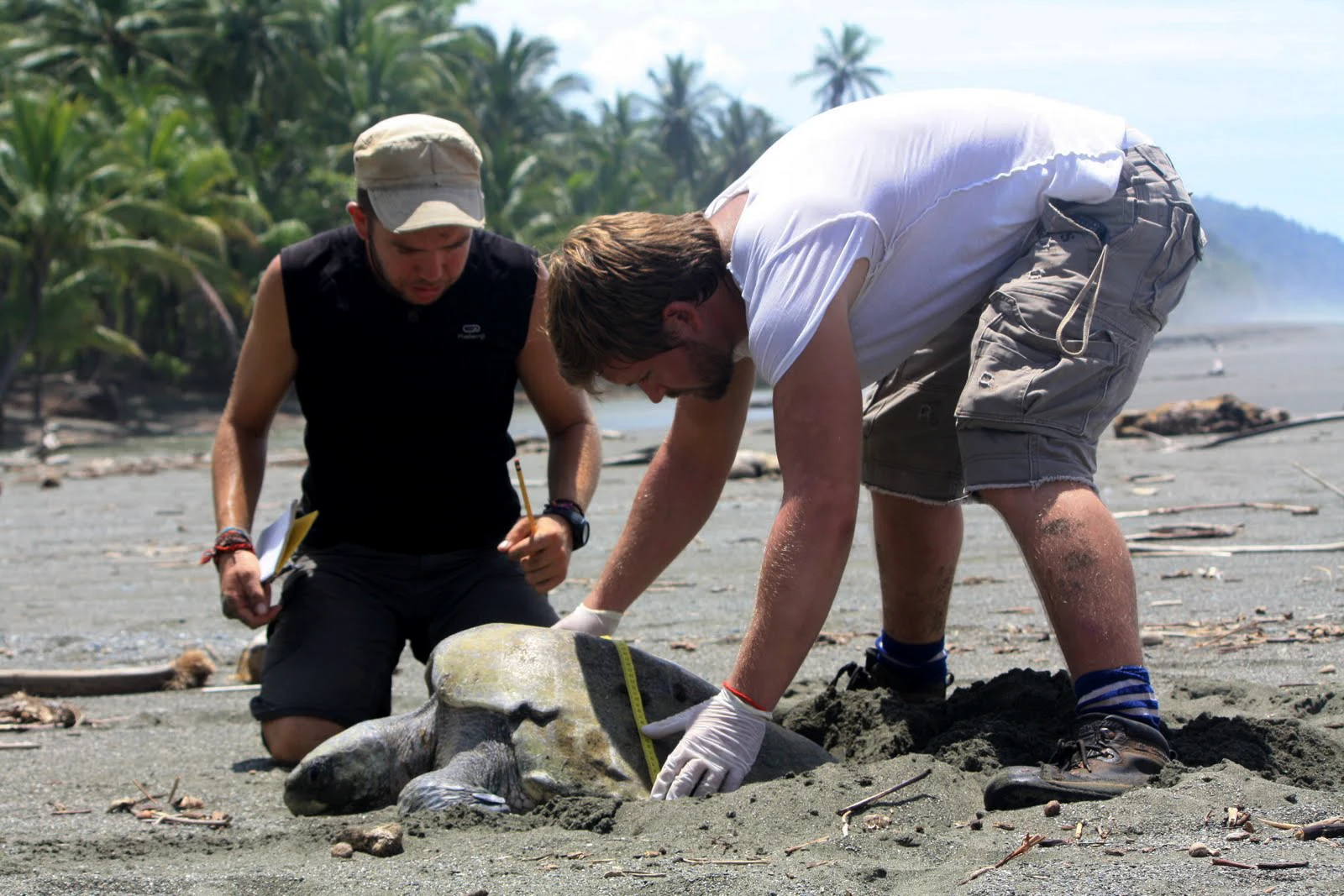
Inside the SAVE Field Guide
Dentro de la Guía de Campo SAVE
Read More →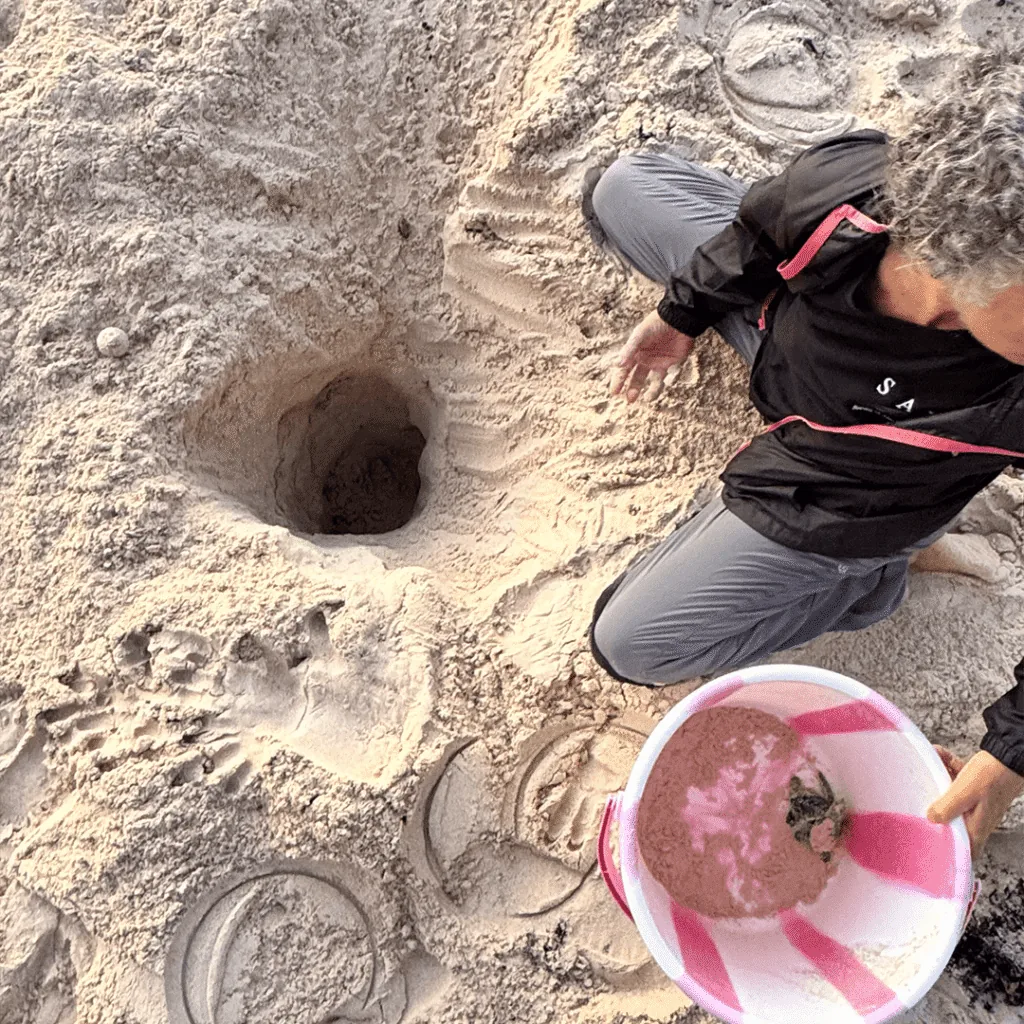
Why Every Nest Counts
Por Qué Cada Nido Cuenta
Read More →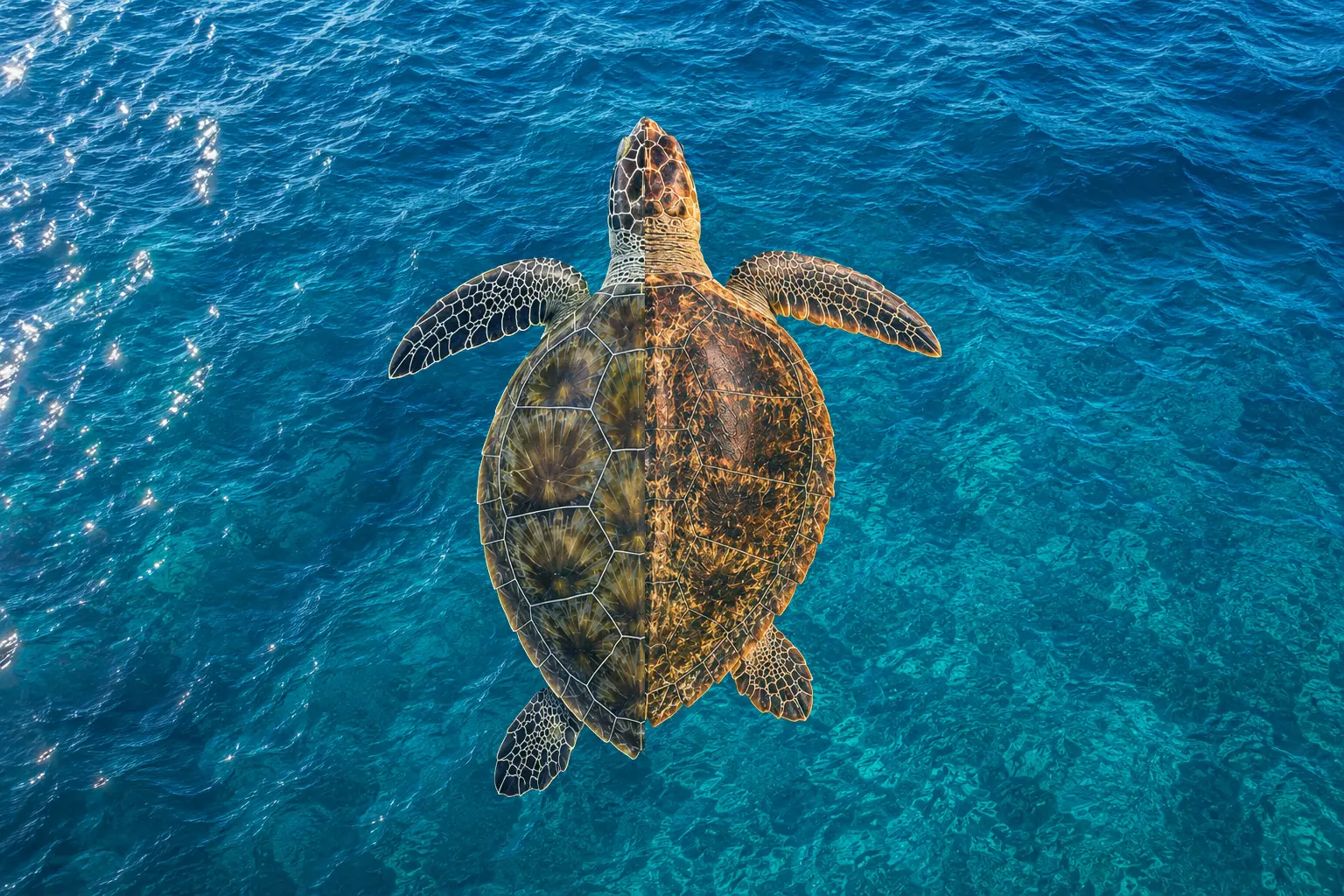
Green (Chelonia mydas) vs. Loggerhead (Caretta caretta)
Tortuga Verde vs. Caguama
Read More →