
Leucismo en Tortugas Marinas: Tortugas Blancas que Desafían las Probabilidades
Qué es, por qué ocurre y qué hacer si encuentras una
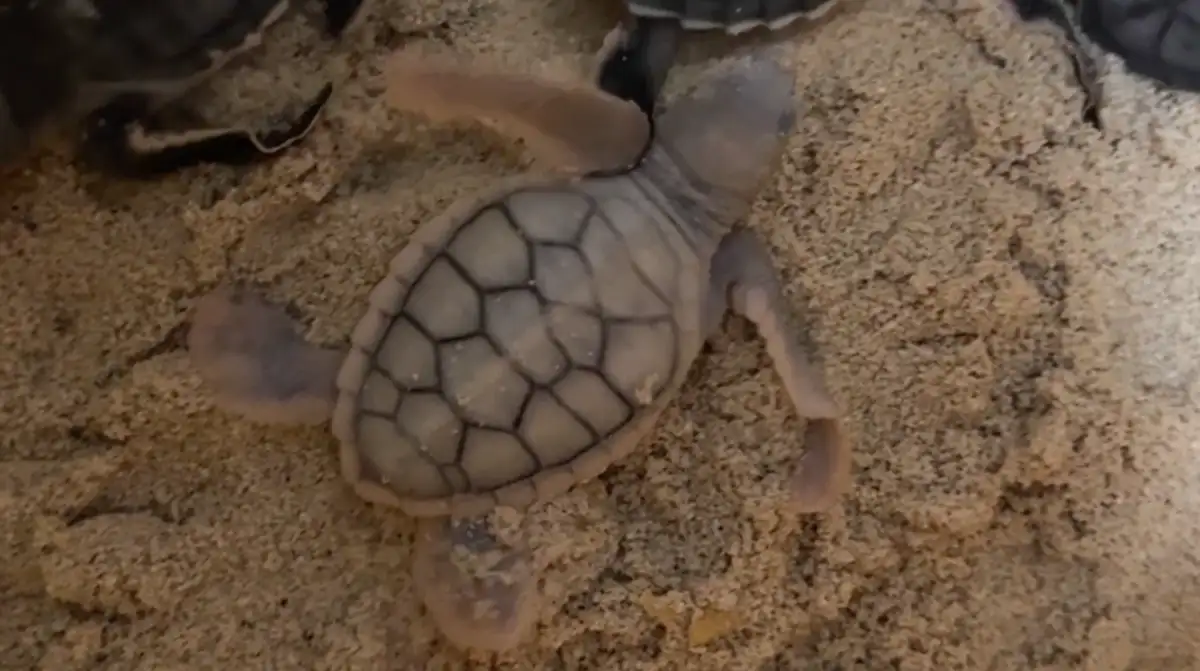
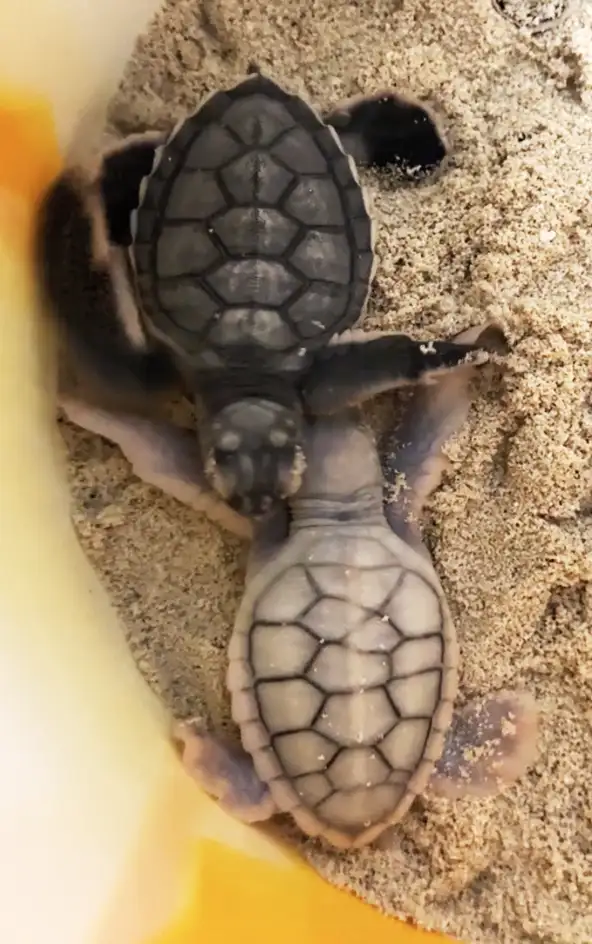
When a sea turtle appears completely white or with an unusually pale coloration, the same question usually comes up: is it albino? The answer isn't always simple. In many cases it may be leucism, a congenital pigmentation disorder that has been documented in hatchlings, embryos, and even adult sea turtles.
Although these animals draw attention for their extraordinary appearance, their coloration is much more than a visual curiosity. Studying leucism can help us understand how genetics, environmental conditions, and sea turtle conservation interact.
What is leucism?
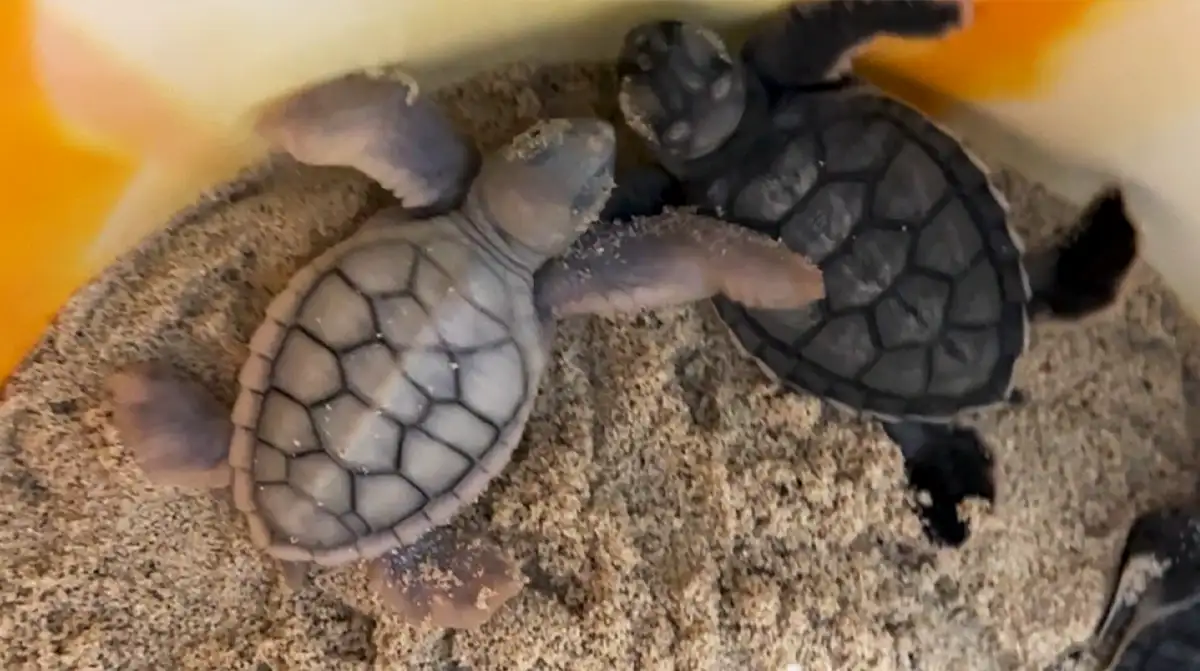
Leucism is a partial or extensive reduction in body pigmentation. It can affect the skin, shell, scales, or flippers, producing a white, cream, yellowish, or irregularly depigmented appearance.
The most important difference from albinism is in the eyes:
- Leucistic turtles usually keep dark eyes or relatively normal coloration.
- In albino animals, the eyes can appear pink, reddish, or very pale due to the absence or extreme reduction of pigment.
- Leucism can affect only certain areas of the body.
- Albinism is usually linked to a more widespread alteration in melanin production.
However, the distinction can't always be made from a photograph alone. In reptiles, the terms aren't used entirely consistently, and some cases require specialized evaluation.
An uncommon but documented condition
Leucism has been recorded in several sea turtle species, including the olive ridley, the green turtle, the hawksbill, and the loggerhead.
One of the most relevant studies was carried out on the olive ridley turtle (Lepidochelys olivacea) in Nuevo Vallarta, Nayarit, on Mexico's Pacific coast. Researchers examined embryos and hatchlings from 100 nests: 1.8% of them had some congenital malformation, and albinism (the term used in the study) accounted for 14.8% of those malformations (Bárcenas Ibarra and Maldonado Gasca, 2009). In other words, in that sample only about 2 or 3 of every 1,000 embryos or hatchlings showed a lack of pigment.
In some individual nests the proportion can be much higher: in 2019, two green turtle nests in Costa Rica showed pigmentation anomalies in 8.8% and about 22% of their hatchlings, respectively (Noroeste, 2023). These are isolated nests, not an average. There is still no global figure indicating how many sea turtles are born with leucism.
Why does it happen?
There's no single confirmed cause. Leucism may be linked to a combination of genetic and environmental factors.
Among the possibilities studied are:
- Mutations in genes linked to pigmentation.
- Alterations in the formation or migration of melanocytes.
- Low genetic diversity or inbreeding.
- Extreme temperatures during incubation.
- Lack or excess of moisture in the nest.
- Pollutants accumulated by the nesting female.
- Hydrocarbons, heavy metals, and other toxic substances.
- Nutritional or physiological problems in the mother.
Sea turtles depend on very specific environmental conditions during embryonic development. Sand temperature and moisture can influence survival, hatchling sex, and possibly the appearance of certain anomalies. Even so, it hasn't been shown that climate change alone is the direct cause of leucism.
The most reasonable explanation is that the phenomenon may arise from the interaction between a genetic predisposition and the particular conditions of the nest.
Can a leucistic turtle survive?
Yes. Leucism isn't necessarily fatal.
A hatchling with isolated leucism can develop, swim, feed, and reach adulthood. The outlook depends mostly on whether other anomalies are present. The most delicate cases are those where the depigmentation appears alongside problems in the eyes, jaw, skull, flippers, or shell.
Leucistic hatchlings may face some additional risks:
- Greater visibility to predators.
- Possible difficulty camouflaging in the sand or water.
- Light sensitivity if eye alterations are present.
- Orientation problems if neurological or visual development is affected.
- Greater vulnerability if other malformations are present.
Still, there's a lack of studies systematically comparing the survival of leucistic turtles versus turtles with normal pigmentation.
White adults that managed to reproduce
One of the most important pieces of evidence that leucism doesn't necessarily prevent long-term survival comes from Tortuguero, Costa Rica.
In 2018, two adult female green turtles (Chelonia mydas) with apparent leucism were observed nesting successfully in Tortuguero National Park. The record is especially valuable because it shows that some individuals can survive the most vulnerable stages of life, reach maturity, and take part in reproduction (Restrepo and Valverde, 2019, Marine Turtle Newsletter).
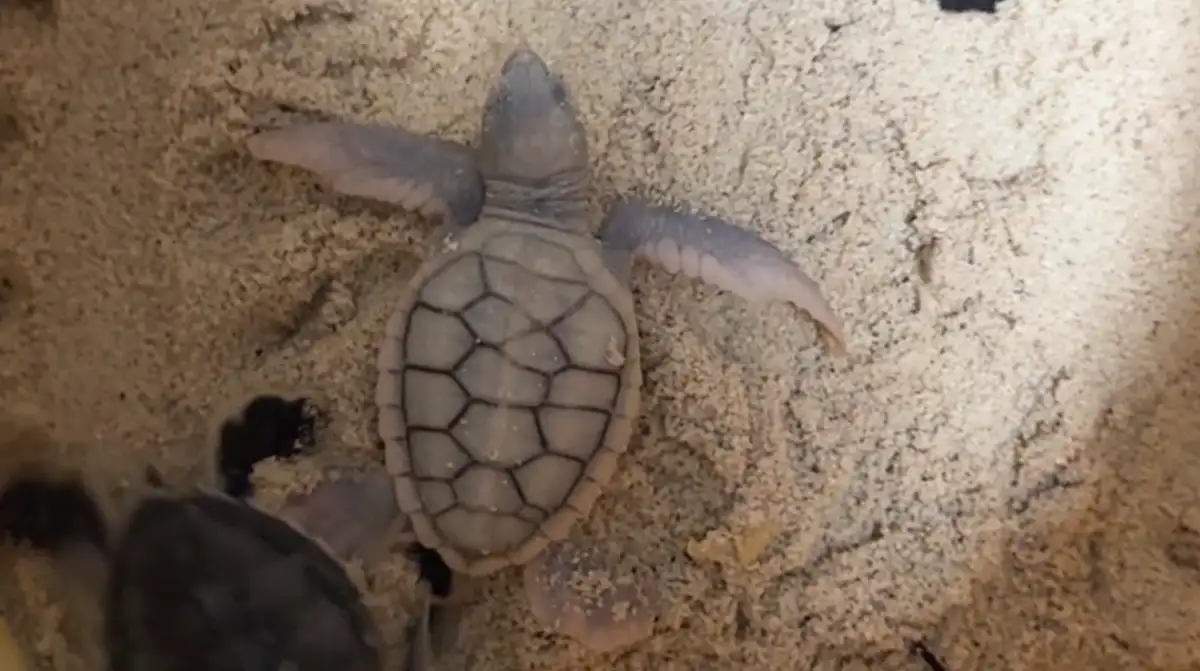
This finding doesn't mean every leucistic turtle has good odds of survival. Hatchlings face very high natural mortality, and most don't reach adulthood, regardless of coloration.
Leucism and albinism: important differences
The white appearance can lead people to use both terms as if they were synonyms, but they aren't.
| Feature | Leucism | Albinism |
|---|---|---|
| Body pigmentation | Reduced or absent in some areas | Very reduced or absent overall |
| Eyes | Usually pigmented | Can be pink, reddish, or very pale |
| Distribution | Can be irregular | Tends to be more uniform |
| Visual effects | Doesn't necessarily affect vision | Can be associated with vision problems |
| Diagnosis | Requires observing body and eyes | Also needs specialized confirmation |
In both cases, a photograph alone may not be enough. Light, moisture, sand stuck to the body, and the turtle's age can all change its appearance.
A window into ecosystem health
Embryonic malformations shouldn't automatically be interpreted as proof of pollution. An isolated case may be due to genetic variation or a natural developmental process.
However, when they appear at an unusually high frequency or alongside other anomalies, they can justify further investigation. Scientists can compare:
- Protected nests versus natural nests.
- Beaches with different pollution levels.
- Sand temperature and moisture.
- Body condition of the females.
- Frequency of malformations between seasons.
- Genetic differences between populations.
That's why carefully recording these cases can provide useful information about the reproductive health of sea turtle populations. At S.A.V.E. Akumal, we record every nest, every hatchling, and every anomaly for this same reason.
What to do if you find a white hatchling
If you find a sea turtle with a leucistic appearance, the most important thing is not to turn it into a display object.
Basic recommendations:
- Don't take it home or try to keep it.
- Avoid touching it unless authorities instruct you to.
- Keep dogs, children, and onlookers away.
- Take a quick photo from a reasonable distance.
- Note the date, beach, and time of the sighting.
- Report it to your local sea turtle camp, conservation group, or environmental authority.
- Don't post the exact location if it could attract visitors or handlers.
Specialized staff will be able to determine whether the turtle needs veterinary care or should continue its natural journey to the sea.
Much more than a white turtle
Leucism in sea turtles is rare, fascinating, and scientifically important. These animals remind us that nature doesn't always follow uniform patterns, and that an extraordinary appearance can have genetic, environmental, or combined origins.
Some leucistic individuals likely die in the earliest stages of life, but others manage to survive for decades and reproduce. Available research still can't precisely establish their survival rates or ecological effects, but every well-documented record helps complete that picture.
More than chasing the image of a "miracle" turtle, what matters most is protecting the beach, reducing pollution, respecting nests, and allowing these animals to continue their natural cycle with as little interference as possible.
Want to be part of the team protecting every nest in Akumal?
Learn About Our Volunteer ProgramSources:
Bárcenas Ibarra, A. and Maldonado Gasca, A. (2009). Malformaciones en embriones y neonatos de tortuga golfina (Lepidochelys olivacea) en Nuevo Vallarta, Nayarit, México. Veterinaria México, 40(4). scielo.org.mx
Restrepo, J. and Valverde, R. A. (2019). Leucistic Adult Female Green Sea Turtles (Chelonia mydas) Successfully Nesting at Tortuguero, Costa Rica. Marine Turtle Newsletter, 159:23-25. seaturtle.org
Noroeste (2023). ¿Qué es el leucismo y cómo afecta a las tortugas marinas? Interview with researcher Trejo Robles. noroeste.com.mx
Cuando una tortuga marina aparece completamente blanca o con una coloración inusualmente pálida, suele surgir la misma pregunta: ¿es albina? La respuesta no siempre es sencilla. En muchos casos puede tratarse de leucismo, una alteración congénita de la pigmentación que ha sido documentada en crías, embriones e incluso tortugas marinas adultas.
Aunque estos animales llaman la atención por su aspecto extraordinario, su coloración es mucho más que una curiosidad visual. Estudiar el leucismo puede ayudar a comprender cómo interactúan la genética, las condiciones ambientales y la conservación de las tortugas marinas.
¿Qué es el leucismo?
El leucismo es una reducción parcial o extensa de la pigmentación del cuerpo. Puede afectar la piel, el caparazón, las escamas o las aletas, y producir una apariencia blanca, crema, amarillenta o irregularmente despigmentada.
La diferencia más importante con el albinismo está en los ojos:
- Las tortugas leucísticas suelen conservar ojos oscuros o con una coloración relativamente normal.
- En los animales albinos, los ojos pueden verse rosados, rojizos o muy claros debido a la ausencia o reducción extrema de pigmento.
- El leucismo puede afectar solo algunas zonas del cuerpo.
- El albinismo suele estar relacionado con una alteración más generalizada de la producción de melanina.
Sin embargo, la distinción no siempre puede hacerse con una fotografía. En reptiles, los términos no se utilizan de forma completamente uniforme, y algunos casos requieren una evaluación especializada.
Una condición poco frecuente, pero documentada
El leucismo se ha registrado en varias especies de tortugas marinas, entre ellas la tortuga golfina, la tortuga verde, la tortuga carey y la tortuga boba.
Uno de los estudios más relevantes se realizó en la tortuga golfina (Lepidochelys olivacea) en Nuevo Vallarta, Nayarit, en el Pacífico mexicano. Los investigadores revisaron embriones y crías de 100 nidos: el 1.8% presentó alguna malformación congénita, y el albinismo (término que usa el estudio) representó el 14.8% de esas malformaciones (Bárcenas Ibarra y Maldonado Gasca, 2009). Es decir, en esa muestra solo alrededor de 2 o 3 de cada 1,000 embriones o crías mostraron falta de pigmento.
En algunos nidos la proporción puede ser mucho mayor: en 2019, dos nidos de tortuga verde en Costa Rica presentaron anomalías de pigmentación en el 8.8% y en cerca del 22% de sus crías, respectivamente (Noroeste, 2023). Son nidos aislados, no un promedio. No existe todavía una cifra mundial que indique cuántas tortugas marinas nacen con leucismo.
¿Por qué ocurre?
No existe una causa única confirmada. El leucismo puede estar relacionado con una combinación de factores genéticos y ambientales.
Entre las posibilidades estudiadas se encuentran:
- Mutaciones en genes vinculados con la pigmentación.
- Alteraciones en la formación o migración de los melanocitos.
- Baja diversidad genética o endogamia.
- Temperaturas extremas durante la incubación.
- Falta o exceso de humedad en el nido.
- Contaminantes acumulados por la hembra reproductora.
- Hidrocarburos, metales pesados y otras sustancias tóxicas.
- Problemas nutricionales o fisiológicos de la madre.
Las tortugas marinas dependen de condiciones ambientales muy específicas durante el desarrollo embrionario. La temperatura y la humedad de la arena pueden influir en la supervivencia, el sexo de las crías y posiblemente en la aparición de ciertas anomalías. Aun así, no se ha demostrado que el cambio climático sea por sí solo la causa directa del leucismo.
La explicación más prudente es que el fenómeno puede surgir de la interacción entre una predisposición genética y las condiciones particulares del nido.
¿Una tortuga leucística puede sobrevivir?
Sí. El leucismo no es necesariamente mortal.
Una cría con leucismo aislado puede desarrollarse, nadar, alimentarse y llegar a la edad adulta. El pronóstico depende sobre todo de la presencia de otras anomalías. Los casos más delicados son aquellos en los que la despigmentación aparece junto con problemas en los ojos, la mandíbula, el cráneo, las aletas o el caparazón.
Las crías leucísticas pueden enfrentar algunos riesgos adicionales:
- Mayor visibilidad para los depredadores.
- Posible dificultad para camuflarse en la arena o el agua.
- Sensibilidad a la luz si existen alteraciones oculares.
- Problemas de orientación si el desarrollo neurológico o visual está afectado.
- Mayor vulnerabilidad si presentan otras malformaciones.
No obstante, todavía faltan estudios que comparen de forma sistemática la supervivencia de tortugas leucísticas y tortugas con pigmentación normal.
Adultas blancas que lograron reproducirse
Una de las evidencias más importantes de que el leucismo no impide necesariamente la supervivencia a largo plazo procede de Tortuguero, Costa Rica.
En 2018 se observaron dos hembras adultas de tortuga verde (Chelonia mydas) con leucismo aparente que anidaron con éxito en el Parque Nacional Tortuguero. El registro es especialmente valioso porque demuestra que algunos individuos pueden superar las etapas más vulnerables de su vida, alcanzar la madurez y participar en la reproducción (Restrepo y Valverde, 2019, Marine Turtle Newsletter).
Este hallazgo no significa que todas las tortugas leucísticas tengan buenas probabilidades de sobrevivir. Las crías enfrentan una mortalidad natural muy elevada, y la mayoría no llega a la edad adulta, independientemente de su coloración.
Leucismo y albinismo: diferencias importantes
La apariencia blanca puede llevar a utilizar ambos términos como si fueran sinónimos, pero no lo son.
| Característica | Leucismo | Albinismo |
|---|---|---|
| Pigmentación del cuerpo | Reducida o ausente en algunas zonas | Muy reducida o ausente de forma general |
| Ojos | Por lo general, pigmentados | Pueden ser rosados, rojizos o muy claros |
| Distribución | Puede ser irregular | Suele ser más uniforme |
| Efectos visuales | No necesariamente afecta la visión | Puede asociarse con problemas visuales |
| Diagnóstico | Requiere observar cuerpo y ojos | También necesita confirmación especializada |
En ambos casos, una fotografía puede ser insuficiente. La luz, la humedad, la arena adherida al cuerpo y la edad de la tortuga pueden modificar su apariencia.
Una ventana hacia la salud de los ecosistemas
Las malformaciones embrionarias no deben interpretarse automáticamente como prueba de contaminación. Un caso aislado puede deberse a variación genética o a un proceso natural del desarrollo.
Sin embargo, cuando aparecen con una frecuencia inusualmente alta o junto con otras anomalías, pueden justificar una investigación más amplia. Los científicos pueden comparar:
- Nidos protegidos y nidos naturales.
- Playas con distintos niveles de contaminación.
- Temperatura y humedad de la arena.
- Estado corporal de las hembras.
- Frecuencia de malformaciones entre temporadas.
- Diferencias genéticas entre poblaciones.
Por eso, registrar cuidadosamente estos casos puede aportar información útil sobre la salud reproductiva de las poblaciones de tortugas marinas. En S.A.V.E. Akumal registramos cada nido, cada cría y cada anomalía por esta misma razón.
Qué hacer si encuentras una cría blanca
Si encuentras una tortuga marina con apariencia leucística, lo más importante es no convertirla en un objeto de exhibición.
Recomendaciones básicas:
- No la lleves a casa ni intentes conservarla.
- Evita tocarla salvo que las autoridades lo indiquen.
- Mantén alejados a perros, niños y curiosos.
- Toma una fotografía rápida desde una distancia prudente.
- Anota la fecha, la playa y la hora del avistamiento.
- Informa al campamento tortuguero, grupo de conservación o autoridad ambiental local.
- No publiques la ubicación exacta si puede atraer visitantes o manipuladores.
El personal especializado podrá determinar si la tortuga necesita atención veterinaria o si debe continuar su recorrido natural hacia el mar.
Mucho más que una tortuga blanca
El leucismo en tortugas marinas es raro, fascinante y científicamente importante. Estos animales nos recuerdan que la naturaleza no siempre sigue patrones uniformes y que una apariencia extraordinaria puede tener orígenes genéticos, ambientales o una combinación de ambos.
Algunos individuos leucísticos probablemente mueren en las primeras etapas de vida, pero otros consiguen sobrevivir durante décadas y reproducirse. La investigación disponible todavía no permite establecer con precisión sus tasas de supervivencia ni sus efectos ecológicos, pero cada registro bien documentado ayuda a completar ese conocimiento.
Más que perseguir la imagen de una tortuga "milagrosa", lo fundamental es proteger la playa, reducir la contaminación, respetar los nidos y permitir que estos animales continúen su ciclo natural con la menor interferencia posible.
¿Quieres formar parte del equipo que protege cada nido en Akumal?
Conoce el Programa de VoluntariadoFuentes:
Bárcenas Ibarra, A. y Maldonado Gasca, A. (2009). Malformaciones en embriones y neonatos de tortuga golfina (Lepidochelys olivacea) en Nuevo Vallarta, Nayarit, México. Veterinaria México, 40(4). scielo.org.mx
Restrepo, J. y Valverde, R. A. (2019). Leucistic Adult Female Green Sea Turtles (Chelonia mydas) Successfully Nesting at Tortuguero, Costa Rica. Marine Turtle Newsletter, 159:23-25. seaturtle.org
Noroeste (2023). ¿Qué es el leucismo y cómo afecta a las tortugas marinas? Entrevista con la investigadora Trejo Robles. noroeste.com.mx
MORE FROM THE JOURNAL
What It Means to Be a Sea Turtle Volunteer
Ser Voluntaria Tortuguera
Read More →
The Raccoon of Akumal (Procyon lotor)
El Mapache de Akumal
Read More →
Inside the SAVE Field Guide
Dentro de la Guía de Campo SAVE
Read More →
Green (Chelonia mydas) vs. Loggerhead (Caretta caretta)
Tortuga Verde vs. Caguama
Read More →